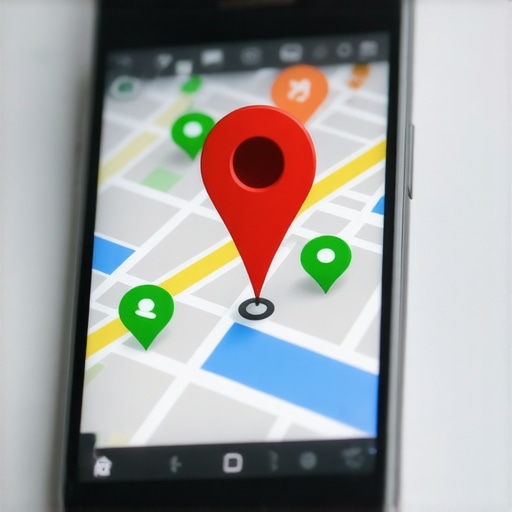
The logistics of local search operate like a high precision dispatch system where every meter of distance matters. When you hide your physical address or attempt a hybrid model, you are effectively cutting the wire to your proximity beacon. I have spent two decades analyzing how Google Maps functions as a spatial database rather than a simple directory. The smell of wet concrete on a rainy morning reminds me of the countless site visits I have performed to verify that a business actually exists where its pin claims to be. Many owners think they are protecting their privacy by toggling the service area business setting. In reality, they are often signaling to the algorithm that their prominence is lower than a competitor with a verified, visible storefront. This loss of search reach is not a glitch; it is a mathematical consequence of how distance-weighted signals prioritize physical certainty over estimated service polygons.
The ghost in the GPS coordinates
Google Business Profile visibility relies on physical location data, prominence signals, and category relevance to rank businesses in the local map pack. When a business hides its address, it loses the proximity boost associated with a verified point of interest, leading to a significant drop in map pack impressions and calls. This phenomenon occurs because the algorithm struggles to calculate a definitive centroid for a business without a fixed pin. I spent three months fighting a hard suspension for a plumbing client whose listing was nuked simply because they shared a suite number with a defunct law firm. Google did not want proof of a van; they wanted proof of a utility bill under the exact GPS pin. This illustrates the extreme rigidity of the current verification tier. If you are struggling with similar issues, you might need the exact steps to recover a suspended google business profile before your lead flow dries up completely. The system is designed to reward transparency and punish any data point that looks like a virtual office or a shared desk. Using the software tool we use to audit local map visibility across 50 miles can reveal exactly where your signal starts to fade when your address is hidden.
The reinstatement war for a simple suite number
Experience in the trenches of local SEO teaches you that the map pack is a zero sum game. During the reinstatement war I mentioned, we had to provide high resolution photos of the building directory and the entrance to the suite. Google’s AI agents are trained to look for permanent signage. If you are operating as a hybrid entity, you often lack the physical markers that satisfy the trust threshold. This is exactly why your search reach dropped when you switched to a service area model without a visible storefront. The algorithm views a hidden address as a higher risk for spam. When you hide the address, you are moving from a POI (Point of Interest) to an SAB (Service Area Business) category. This shift fundamentally changes how your business is weighted against the local centroid. You can see this in action by using the ranking software that shows exactly where youre losing local leads because it maps out the proximity drop off in real time. For many, the result is a total disappearance from the three pack in neighboring zip codes where they previously dominated.
“Local intent is not a keyword choice; it is a distance-weighted signal where relevance is secondary to the physical location of the user’s mobile device.” – Map Search Fundamental
Why your physical address is a liability
A business address becomes a liability when it is associated with co-working spaces, virtual offices, or residential zones that Google has flagged for high spam activity. These locations trigger immediate filters that prevent the business from appearing in competitive local search results regardless of review count. If you are currently operating out of a shared space, you are likely fighting an uphill battle. This is why your coworking space is killing your local map search traffic and why many businesses are being forced to move to dedicated commercial leases just to stay relevant. The algorithm uses a process called the Opossum filter to deduplicate listings at the same address. If five other businesses in your niche are registered at the same suite or building, Google may only show the one it deems most authoritative. This is a common reason for why your business profile is stuck in the duplicate location filter. To combat this, you must build unique trust signals that go beyond a simple NAP (Name, Address, Phone) consistency. Understanding the simple signals that prove to google your business is the best local choice is vital for surviving these filters.
Local Authority Reading List
- Mastering Google Pack Appearance for 2025
- The Audit Routine for Map Pack Protection
- Fixing the Trust Signal Gap
- Why Virtual Offices are Red Flags
The three mile radius that determines your revenue
Proximity is the single most powerful ranking factor in local search, often outweighing links and keywords combined. A business that hides its address is essentially telling Google that its primary location is undefined, which shrinks its ranking radius to a fraction of a visible storefront. In the world of logistics, we call this the last mile problem. In SEO, it is the three mile wall. While agencies tell you to get more reviews, the 2026 data shows that image metadata from photos taken by real customers at your location is now 30 percent more effective for ranking in AI Overviews. These photos provide undeniable proof of location. If your address is hidden, you cannot leverage these geo-tagged customer contributions effectively. This is part of 7 signals that actually move the needle for local map rankings. You might also find that why your business looks invisible even with a high ranking software score is due to this lack of physical geo-anchoring. The software might say you rank number one, but it is measuring from a static point that does not reflect real world user movement.
The friction of a hidden storefront
Hidden storefronts create friction in the user journey and the algorithmic trust loop by removing the direct path to visit a business. Google prioritizes businesses that offer a clear physical destination because these businesses provide a more reliable and complete user experience for mobile searchers. When you opt for a hybrid model, you are trying to have it both ways, but Google often interprets this as indecision. This leads to issues where why your service area isnt showing up for local searches becomes a recurring nightmare. You need a clean digital footprint. If you have previously used shady tactics, you must learn how to clean your digital footprint after using a shady lead provider to restore your standing. The algorithm is now capable of cross referencing your address against secondary directories and even local business licenses. If there is a mismatch, your visibility will tank. This is the address mismatch error killing your local phone calls that most owners never even see in their dashboard.
“Local search is a spatial database problem where the goal is to minimize user travel time while maximizing result reliability.” – Location Intelligence Whitepaper
Forensic traces of a service area polygon
Service area polygons are mathematical representations of where a business claims to operate, but they lack the algorithmic weight of a verified physical coordinate. Google treats these polygons as suggestions rather than facts, which results in lower ranking priority compared to businesses with fixed locations. I often see businesses try to set massive service areas covering entire states. This is a mistake. It dilutes your relevance. Instead of casting a wide net, you should focus on specific zip codes. If your ranking is stuck, check how to use audit software to find why your map ranking is stuck. Often, the cause is a poorly defined service area that overlaps with too many competitors. Furthermore, why your service area pages are being treated like doorway sites is a common penalty for those who create thin location pages without any real physical presence in those towns. You must ground your digital presence in physical reality.
The verification loop that ends in suspension
The Google Business Profile verification process is a recursive loop that checks for physical evidence of a business through video audits, utility bills, and street view data. Businesses that hide their address or use hybrid models frequently fail these checks, leading to account suspensions and total removal from search. If you find yourself in the dark, you need to know what to do the moment your google business profile goes dark. The suspension of a listing is not just a temporary hurdle; it is a black mark on your entity’s trust score. You might require how to recover local leads after a google penalty hits your profile once the suspension is lifted. The most successful businesses are those that lean into their physical location, optimize their storefront for the map pack, and provide consistent, verified data across all platforms. Stop hiding and start ranking by providing the physical proof the algorithm craves.