Why your service area isn’t showing up for local searches
Everyone wondered why a top-ranking roofing company vanished from the Map Pack overnight. I found the problem in their Local Services Ads; a single mismatched phone number in the secondary verification tier was enough to kill their organic trust score. This is the reality of the modern local algorithm. It is not about how many reviews you have or how long your description is. It is about a mathematical handshake between your physical location and the digital signals you broadcast. If the coordinates do not align, the visibility dies. I have seen multi-million dollar service businesses fall into a digital void because they ignored a single centroid shift. Local search is now a game of spatial precision. If you are not appearing where you should be, you are likely suffering from a proximity mismatch or a signal conflict that confuses the Google crawlers.
The phantom barrier of GPS coordinates
Your service area fails to appear because Google cannot verify the physical connection between your business entity and the specific latitude and longitude of the searcher. Mismatched signals such as inconsistent phone numbers, overlapping service areas, or weak location-based content prevent the algorithm from trusting your proximity for high-intent queries.
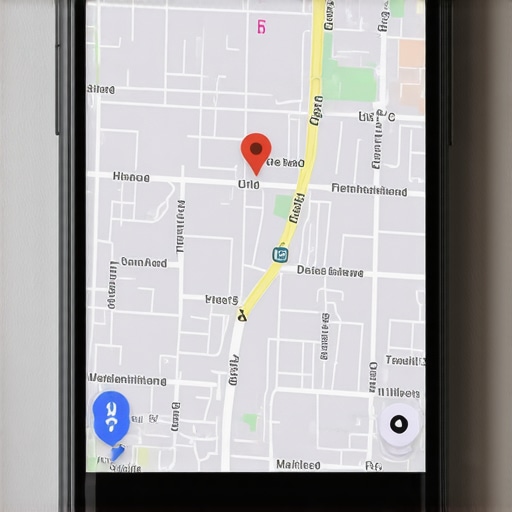
Proximity is the most weighted factor in the local algorithm. When a user searches for a plumber or a lawyer, Google creates a localized radius around that user. This radius is not a perfect circle. It is a jagged, math-based polygon influenced by local competition and your own business 3 pack secrets how to dominate local rankings now strategies. If your business is located three miles away but your digital footprint suggests you are five miles away, you lose. The algorithm uses GPS salience to determine if you are a relevant answer. This is why why your map pin shows up in the wrong neighborhood is such a critical issue to solve immediately. One wrong pin placement can effectively mute your profile for an entire zip code. I once spent a week tracking a client’s ranking drop only to find a competitor had suggested an edit to move their pin across the street. That small shift was enough to push them out of the primary centroid of the neighborhood. You must view your location as a fixed point in a spatial database that requires constant verification. If the data points do not lock together, the map listing remains invisible to those who need it most.
“Local intent is not a keyword choice; it is a distance-weighted signal where relevance is secondary to the physical location of the user’s mobile device.” – Map Search Fundamental
The hidden danger of merged business listings
Brand confusion occurs when Google merges multiple business profiles into one due to shared phone numbers, addresses, or similar names. This creates a data conflict that suppresses visibility as the search engine becomes unsure which entity is actually providing the service at the given location or service area.
I have seen incredible damage caused by seo services to fix brand confusion from merged gmb listings that were handled poorly. When two businesses share a suite number without proper differentiation, Google’s deduplication algorithm kicks in. It assumes they are the same business and hides one. This is especially common for service businesses that operate out of coworking spaces or shared offices. You might find that why your business profile is stuck in the duplicate location filter because a previous tenant never closed their listing. This legacy data acts like a parasite. It clings to your address and drains your local authority. To fix this, you need a forensic approach to data cleanup. You cannot just delete a profile; you have to prove to Google that the old entity no longer exists. This involves auditing every major directory. If you do not how to identify which directory is leaking wrong business data, you will continue to see these ghost listings pop up. It is a cycle of data pollution that requires a heavy hand to clear. Mixed language listings also contribute to this mess. If your business is listed in English and Spanish on different platforms, Google might perceive it as two different shops, leading to a ranking penalty that is difficult to diagnose without specific tools.
The strategy for cleaning up old or closed locations
Cleaning up closed locations requires a systematic removal of old citations and a formal request to mark defunct profiles as permanently closed. Failing to remove these digital footprints leads to citation inconsistency, which triggers Google to lower your trust score and hide your active service area pages.
Many business owners move offices and forget about their old digital trail. This is a fatal mistake. Google sees the old address and the new address and perceives a lack of reliability. You must utilize local seo services to clean up old or closed locations to ensure your current profile is the only one broadcasting. The algorithm hates ambiguity. When it sees how your old business address is secretly tanking your current map rankings, it simply stops showing you in the local 3 pack. It is safer for Google to show a competitor with a verified address than to risk sending a user to a vacant building. This is why local seo services to clean up mixed language listings hurting local rankings are becoming more popular. Consistency is the currency of the map pack. If you have mismatched phone numbers, you are actively leaking leads. This is documented in our guide on how one mismatched phone number is quietly sabotaging your map ranking. I once worked with a contractor who had four different phone numbers across twelve directories. His ranking was non-existent. Within thirty days of unifying that data, he was in the top three for his primary service area. The math is simple; unified data equals higher trust.
Local Authority Reading List
- Secrets to Dominating the 3-Pack
- Daily Audit Toolkit for Map Signals
- Why Service Area Pages Often Fail
- Address Mismatch Errors and Lead Loss
Essential toolkits for ranking in the map pack
The best software for ranking in the Google Maps 3 pack includes tools like BrightLocal, Whitespark, and specialized local grid trackers. These toolkits allow you to visualize your ranking across a geographical grid, identifying exactly where your service area coverage drops off due to proximity or competition.
Using a standard rank tracker is useless for local SEO. You need to see a grid. You need to know that you are number one at the corner of Main Street but number eight just two blocks away. This is where top google business profile seo toolkits come into play. These tools show you the “proximity wall.” This wall is where your influence ends. To push that wall further out, you need more than just keywords. You need local justifications. These are the snippets Google shows like “Their website mentions this service.” If you aren’t sure how to use tools to rank your google business profile, you are essentially flying blind. You might think you are winning when you are actually invisible to sixty percent of your potential customers. A gmb optimization toolkit for service businesses should also include a way to monitor competitor spam. If a competitor is using a fake address, they are stealing your proximity. You have to be aggressive. You have to use the exact process for nuking competitor spam listings in your service area to clear the field. I have seen rankings jump five spots just by reporting three fake listings in a single afternoon. The map is a finite space. Every fake listing is a spot you could have had.
“Relevance is the foundation of search; but for local businesses, proximity is the structural frame that determines the visibility of that foundation.” – Location Intelligence Whitepaper
The simple fix for gmb rankings after review removal
Recovering from mass review removal requires an immediate audit of your review acquisition methods and a shift toward organic, location-stamped customer feedback. Google removes reviews that appear incentivized or lack geographic metadata, so you must focus on rebuilding trust through authentic user interactions and photos.
If you have been hit by a filter, you need seo services to fix gmb rankings after mass review removal. This usually happens because the algorithm detected a pattern. Maybe you asked for twenty reviews in one day. Maybe they all came from the same IP address. Google’s spam team is more advanced than most realize. They look for the digital fingerprint of the reviewer. If a review comes from a user who has never been to your city, it carries less weight. In fact, it might trigger a manual review. You need a how to rebuild business trust after your profile was flagged for spam plan that involves getting reviews from local, active accounts. While many think more is better, the truth is that why your competitors rank higher with fewer 5 star reviews often comes down to the quality and geographic relevance of those reviews. A single review from a Local Guide level 8 who lives in your town is worth more than fifty generic reviews from a click farm. You should also be careful about why asking for reviews in bulk is triggering google spam filters. It looks like a bot attack. Slow and steady wins the map race every time. Focus on getting customers to upload photos with their reviews. Photos taken at your location contain EXIF data that proves the business is real and the customer was actually there. This is a massive trust signal that many ignore.
Why your service area pages fail to reach the next town
Service area pages fail because they lack unique, hyperlocal content that demonstrates actual work performed in that specific town. Simply changing the city name on a template is seen as thin content by Google, which prevents the page from ranking for nearby service area queries.
If you are trying to rank in a town where you do not have a physical office, you are fighting an uphill battle. You cannot just use a local seo checklist and toolkit for gmb and expect magic. You need proof of work. This means your city landing pages should feature photos of jobs done in that specific zip code. They should mention local landmarks. They should link to local organizations. If your page looks like a cookie-cutter template, Google will ignore it. This is why your service area pages fail to reach the next town over. You are not providing any “information gain.” The AI overviews are looking for specific details that verify you are a local expert. For example, if you are an HVAC company, mention the common issues found in the historic district’s old piping. That level of detail is something a generic national chain cannot replicate. You should also consider how to build city landing pages that actually capture traffic from nearby towns by focusing on the problems unique to those residents. Use 5 local seo tools that find hidden ranking gaps to see what your competitors are missing in those areas. Often, there is a whole neighborhood that no one is targeting because they are too focused on the main city center.
The truth about ranking software and automated tools
Automated ranking tools often provide misleading data because they do not account for the extreme variability of local search based on the user’s precise location. A tool might show you at the top of the search results while a customer standing one mile away cannot find your business.
I am wary of anyone who relies solely on automated reports. These reports are often generated from a single server location that does not reflect real-world conditions. This is why automated ranking tools often lie about your true local position. You need to verify your rank manually or use a tool that mimics mobile GPS coordinates. If you are not doing the manual way to verify your rank in a neighboring zip code, you are making decisions based on bad data. I have seen owners spend thousands on best tools to rank google business profile only to find out their phone hasn’t rung in weeks because they were invisible in the most profitable part of town. You have to look at the metrics that matter. Calls, directions, and website visits are the only true indicators of success. If your rank tracker shows a win but your phone is silent, you are losing. This is a common phenomenon explored in why your ranking software shows a win when your phone isnt ringing. The map is dynamic. It changes based on the time of day, the traffic patterns, and even the searcher’s previous history. You need a strategy that is as fluid as the algorithm itself.
Final checklist for service area visibility
To ensure your service area is visible, you must unify your NAP data, remove all duplicate or closed profiles, optimize your city landing pages with local evidence, and aggressively monitor for competitor spam that might be displacing your map pin.
If you are still struggling, it is time to look at the microscopic details. Check your schema markup. Is your address exactly the same as it appears on Google Maps? Even a missing suite number can cause a disconnect. Use the one local schema edit that proves your business is actually there to give the crawlers the confidence they need. Look at your category selection. If you are a “General Contractor” but only do “Roofing,” you might be confusing the algorithm. This is the category selection error that makes your business invisible to local searchers. Every small adjustment adds up to a stronger signal. Don’t fall for the trap of why hiring a cheap service to fix duplicate profiles often makes things worse. They often use automated scripts that leave behind fragments of data. You need a clean sweep. Your digital presence should be a reflection of your physical business; organized, reliable, and easy to find. If you treat your map listing with the same care you treat your storefront, the results will follow. The proximity beacon is yours to control, but you have to keep the signal clear. Stop paying for generic packages that ignore your actual geography. Start focusing on the spatial reality of your market.