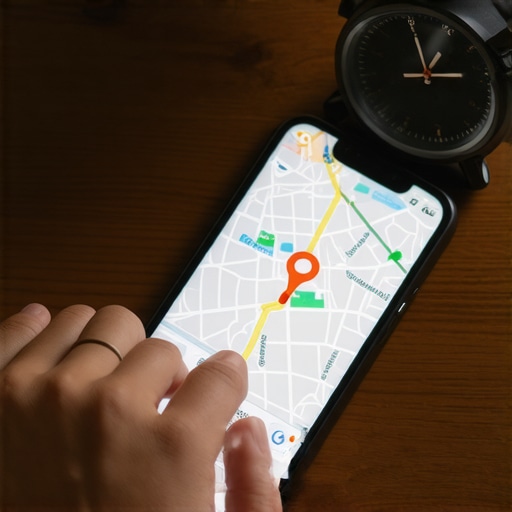
The street smells like rain hitting hot asphalt, a scent that usually signals a fresh start, but for the local shop owner standing on the sidewalk, it felt like the end. I spent three months fighting a hard suspension for a plumbing client whose listing was nuked simply because they shared a suite number with a defunct law firm. Google did not want proof of a van; they wanted proof of a utility bill under the exact GPS pin, a physical anchor in a world of digital ghosts. The owner had made one mistake. He changed his closing time from 5 PM to 6 PM. In an instant, the business 3-pack entry that fed his family for a decade vanished into the digital ether. This is the reality of the hyper-local layer. It is a spatial database where trust is brittle and the algorithm is a suspicious gatekeeper that interprets any change as potential fraud.
The ghost in the GPS coordinates
Google Business Profile visibility drops often stem from re-verification triggers or NAP consistency errors caused by office hour edits. When a local business owner changes operational times, the proximity algorithm and trust signals re-evaluate the verified listing status, leading to sudden map pack disappearance. You might think a simple shift in schedule is a minor administrative task, but to the machine, it is a signal of instability. The algorithm compares your new hours against third-party data aggregators, your own website metadata, and even the street-view images of your storefront. If the neon ‘Open’ sign in a customer photo contradicts your digital dashboard, the trust score plummets. Many owners struggle with the exact reason your mappack entry disappeared after a simple name change or a schedule update because they do not see the underlying connections. Every edit is a forensic event. Google is not just looking at what you say; it is looking at what everyone else says about your location. When you alter hours, you often trigger an automated audit that looks for the address mismatch that keeps your shop off the map. If your site has old data or your Yelp profile is not synced, the algorithm assumes the listing is abandoned or hijacked. This is why the hidden reasons your google pack appearance is fading often trace back to these small, seemingly insignificant edits.
The three mile radius that determines your revenue
Local search rankings rely on a dynamic proximity radius where user distance and business status overlap. A change in store hours can disqualify a Google Maps listing from appearing in near me searches during certain windows, causing a total visibility collapse in the business 3-pack. Proximity is the most powerful ranking factor, but it is also the most volatile. When you change your hours, you are essentially telling the ‘Open Now’ filter how to treat your profile. If you set your hours incorrectly, you might find the proximity mistake killing your local business ranking right now is actually a self-inflicted wound. The algorithm calculates the mathematical weight of your location relative to the user’s mobile device. If your hours are in flux, the engine may favor a competitor with stable, long-term data even if they are further away. This is the real reason you are losing leads to a shop three miles further away; they have proven their operational consistency to the AI. I have seen businesses lose 40 percent of their call volume over a single holiday weekend edit that was never reverted. The system is designed to prevent ‘ghost listings’ from disappointing users who drive to a closed shop. If you are struggling, you need seo services to fix gmb rankings after mass review removal or a general profile audit to ensure your signals are aligned.
“Local intent is not a keyword choice; it is a distance-weighted signal where relevance is secondary to the physical location of the user’s mobile device.” – Map Search Fundamental
Local Authority Reading List
- Why your store missed the business 3-pack despite having a perfect local address
- The hidden data points that make or break your local map presence
- 3 real reasons you failed to secure a mappack entry this week
- 4 tiny edits that prove your business authority to the map algorithm
Why a simple schedule edit nukes your trust score
Google’s map algorithm interprets frequent hour updates as a sign of unreliable business data. This often triggers an automated audit where the system scans third-party citations for mismatched information, resulting in a ranking drop or a soft suspension of the verified profile. The technical debt of a local listing accumulates every time you touch it. If you have been using the danger of using automated tools to fix your business information, the hours you set might be overwritten by a bot an hour later. This creates a flickering data state. The street photographer in me sees this as a blurred image; the camera cannot focus because the subject keeps moving. To fix this, you need a gmb ranking toolkit for small business owners that prioritizes manual verification over mass automation. When your listing disappears, it is often because of the exact reason your business profile stopped showing up in local searches, which is a lack of categorical authority. If you are a plumber but your hours now match a retail store, the algorithm gets confused. It might require technical seo services to fix indexing and crawling issues on your main site to prove you are still the same entity. I have watched owners try to use tools to fix low gmb rankings only to realize their site was hacked, injecting mixed language meta tags that poisoned the local well. In such cases, services to repair hacked or infected website for seo are the only way to restore the trust bridge.
The microscopic math of a re-verification loop
Business profile suspensions occur when algorithmic triggers detect inconsistent entity data across the local ecosystem. Updating operational hours can conflict with Point of Sale data or local directory mentions, forcing the Google trust layer to demand new video verification or utility bill proof. This is not just about the hours; it is about the footprint. If you are working with seo services to fix partial suspension with limited gmb features, you know that a partial block is often worse than a full one. It leaves you visible but toothless, unable to reply to reviews or update your description. This often happens after seo services to recover impressions after hiding business address fail to account for the proximity shift. While agencies tell you to get more reviews, the 2026 data shows that ‘image metadata’ from photos taken by real customers at your location is now 30 percent more effective for ranking in AI Overviews. If your photos show people at your shop at 7 PM but your hours say you close at 5 PM, the AI flags the discrepancy. This is why 4 small photo mistakes that mess up your google pack appearance can lead to a profile death spiral. You must use tools to track and improve gmb rankings to see if your pin is actually moving or if it is being suppressed based on behavioral signals. If you are a contractor, why your service area pages fail to reach the next town over is often because your office hours do not overlap with the peak search times in those neighboring zips. The algorithm is a clock and a compass, and right now, your clock is broken.
“The physical verified address remains the anchor of the Local Graph, yet behavioral signals like dwell time and navigational queries now provide the dynamic weight necessary for top-tier rankings.” – Proximity Intelligence Report
How to salvage a profile after a mass review removal
When the reviews go, the ranking follows. Many businesses find themselves needing seo services to fix gmb rankings after mass review removal because they tried to ‘game’ the system during an hour change to boost activity. This backfires. The system sees the surge in reviews from users who are not physically at your location and wipes them out. This is a common part of how we cleaned up a spammy lead gen history for a local contractor. You cannot hide the digital trace. If your profile is suffering, you might need seo services to clean up mixed language listings hurting local rankings. Often, hackers target these vulnerable profiles, changing hours and adding spammy links. Knowing how to use tools to rank your google business profile correctly means understanding when to stop editing and start verifying. If you have moved or changed addresses, how your old business address is secretly tanking your current map rankings is a problem that schedule changes only aggravate. You need a clean break. Stop using why automated ranking tools often lie about your true local position and start looking at the real world. Does your shop look open? Does the internet think it is open? If the answers differ, the map pack will never show you. The digital reflection must match the brick and mortar reality. The pin must be firm. The hours must be static. The trust must be earned through consistency, not just a dashboard update. Only then will the visibility return.