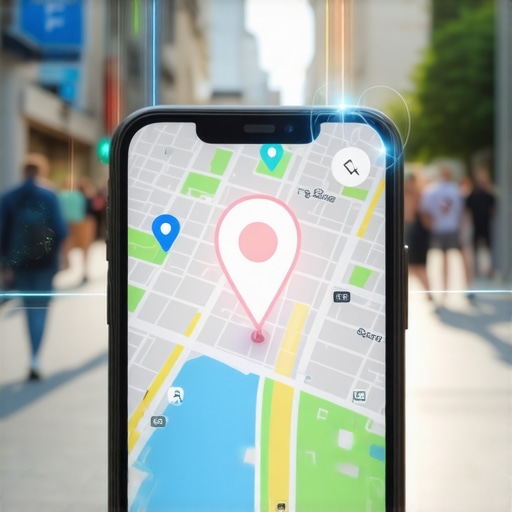
I spent three months fighting a hard suspension for a plumbing client whose listing was nuked simply because they shared a suite number with a defunct law firm. Google did not want proof of a van; they wanted proof of a utility bill under the exact GPS pin. The air in that plumber’s back office smelled like wet concrete and old paper as we scanned decades of lease agreements. This was not a keyword issue. This was a spatial database conflict where the algorithm saw two distinct entities occupying the same 0.0001 degree of latitude and longitude. To the engineers in Mountain View, that overlap looked like a proximity exploit. We had to prove the physical reality of a service door and a separate mailbox to satisfy a machine that only understands coordinates. This is the world of high-stakes local search, where a single character in a suite number can erase a million dollars in annual revenue.
The ghost in the GPS coordinates
GPS coordinates and latitude longitude data are the primary location signals that Google Maps uses to define business proximity. When NAP consistency fails, the local search algorithm triggers a ranking filter. Professional GBP management requires auditing spatial data points to ensure Map Pack visibility remains stable.
The math of a local listing is colder than most agencies admit. When you look at your storefront, you see a sign and a door. When the local algorithm looks at you, it sees a point on a Cartesian plane. If that point is too close to a competitor with higher authority, you get filtered out. This is why many owners find that your store missed the business 3 pack despite having a perfect local address. The problem is often the centroid, the theoretical center of a search area. As the user moves their phone, the distance between their device and your coordinate changes. A shift of fifty feet can be the difference between being first and being invisible. This is not about keywords. It is about the physics of the signal. If your phone number is mismatched across the web, it creates a digital blur around your coordinate. You can see how one mismatched phone number is quietly sabotaging your map ranking by diluting the confidence score Google assigns to your pin.
“Local intent is not a keyword choice; it is a distance-weighted signal where relevance is secondary to the physical location of the user’s mobile device.” – Map Search Fundamental
Why your physical address is a liability
Address verification and utility bill proof are trust signals that Google Business Profile uses to prevent map spam. Using virtual offices or shared workspaces leads to hard suspensions. Clean citation data and localized schema are required to maintain a top 3 ranking in local searches.
Many businesses are sitting on a ticking time bomb because of their lease structure. If you are in a building with twenty other businesses and your suite number is not clearly defined in the USPS database, you are at risk. The algorithm hates ambiguity. It views an undefined suite as a potential lead-gen trap. This is a common reason the address mismatch that keeps your shop off the map remains an unsolved mystery for most owners. They fix the website but forget the third-party directories that still list an old office from five years ago. This legacy data acts as an anchor. Every time a scraper finds your old address, it chips away at the authority of your current one. This is why your old business address is secretly tanking your current map rankings without you ever receiving a notification in your dashboard.
Local Authority Reading List
- Expert Tips for 2025 Map Rankings
- The Quiet Citation Errors Killing Trust
- Why You Failed the Map Pack Entry
- The Schema Edit That Proves Existence
The three mile radius that determines your revenue
Proximity signals and searcher location dictate Map Pack appearance within a three mile radius. The Vicinity algorithm weighs physical distance over review count. Fixing proximity errors through hyper local content and geotagged images allows smaller local shops to compete against national chains for high intent leads.
I have seen shops with five hundred reviews lose to a competitor with fifty reviews simply because the smaller shop was 400 meters closer to the searcher. Google is obsessed with the “convenience” factor. This creates a proximity cage. If you want to break out of that cage, you cannot just buy more backlinks. You need to prove you serve the surrounding areas through behavioral signals. If you don’t, you will find that the real reason you’re losing leads to a shop three miles further away is often a failure of service area definition. You need to audit your service area pages. If those pages are generic, they won’t rank. You can learn why your service area pages fail to reach the next town over and how to fix the geo-fencing in your metadata to expand your reach. It is a game of digital territory.
“Relevance is the engine, but proximity is the fuel. Without a verified physical presence within the searcher’s immediate radius, authority becomes a secondary ranking factor in the local pack.” – Location Intelligence Whitepaper
The failure of automated metrics
Rank trackers and automated SEO tools often report ghost positions that do not reflect real world search results. Local SEO audits must use IP spoofing or manual grid searches to see actual map pins. Relying on automated reports leads to marketing blind spots and lost revenue.
Your rank tracker is lying to you. Most tools check rankings from a single data center, which is not how a human with a smartphone searches. A human is moving. They are switching from Wi-Fi to 5G. They are walking down a street where building interference affects their GPS. This is why your rank tracker is showing ghost positions that don’t exist. To see the truth, you have to use a grid-based heat map that checks rankings every 500 meters. If you don’t do this, you might think you are winning when you are actually invisible two blocks away. This discrepancy is why your map tracker shows you at the top while customers can’t find you in the wild. Real success is measured by calls, not by green numbers on a synthetic dashboard.
The silent signal of customer photos
User generated content and customer photos provide visual trust signals to the Google algorithm. Image metadata and AI object recognition confirm that a business location is active. High resolution photos with local geotags improve CTR and Map Pack rankings in competitive local niches.
Google uses AI to look at the photos your customers upload. If the AI sees a plumbing truck in a residential driveway, it confirms your service area. If it sees a clean, well-lit storefront, it increases your conversion score. The metadata in these photos, specifically the EXIF data containing coordinates, is a massive ranking factor that most people ignore. However, if your photos are low quality or look like stock images, they can hurt you. I’ve analyzed cases where your business profile photos are scaring off map pack customers because they feel untrustworthy. You need to encourage customers to take photos on-site. This creates a cluster of “proof of life” signals that no automated link bot can replicate. If your profile looks messy, you should look into 4 specific edits to fix your google pack appearance fast to regain your professional edge.
Dealing with the noise of fake feedback
Review spam and fake negative reviews can trigger algorithmic penalties or profile suspension. Forensic review audits are necessary to identify VPN patterns and competitor attacks. Using the Google Business Profile toolkit to report fake reviews is the only way to restore local ranking stability.
The review ecosystem is currently a war zone. I have seen competitors hire click farms to drop one-star reviews from accounts that have never been in the same state as the business. If you ignore this, your ranking will bleed out. You cannot just bury them with five-star reviews. You have to understand the quick way to report fake reviews that actually works for owners by using the specific legal and policy frameworks Google provides. Many owners fail because they respond emotionally. Don’t do that. Treat it like a forensic investigation. Show Google the pattern. Show them the timestamps. If you stop managing this, local business ranking drops the moment you stop managing reviews and the algorithm assumes you are no longer a high-quality entity. It is about maintaining a clean, verified history in a world of digital noise. Success in the Map Pack is not a destination. It is a state of constant, technical vigilance.