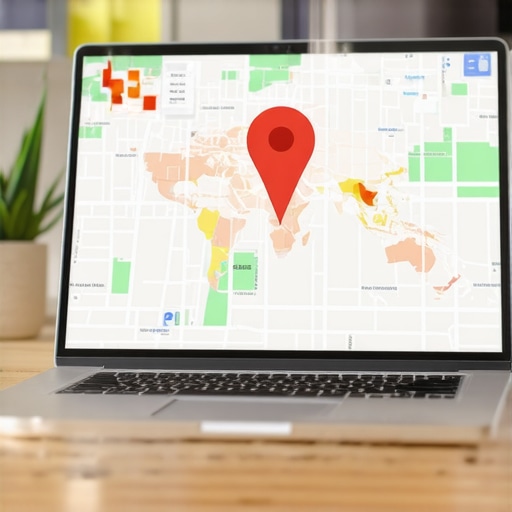
Why your virtual office setup is the reason your map pin is hidden
I spent three months fighting a hard suspension for a plumbing client whose listing was nuked simply because they shared a suite number with a defunct law firm. Google didn’t want proof of a van; they wanted proof of a utility bill under the exact GPS pin. This is the brutal reality of the modern Map Pack ecosystem. It is no longer a directory; it is a high-stakes spatial database where the algorithm acts as a forensic investigator. If you are using a rented address to trick the system, you are not just flirting with a suspension; you are actively poisoning your business’s proximity beacon. The pin moved. The trust vanished. The phone stopped ringing because the database identified a conflict in the physical reality of your operation.
The ghost in the GPS coordinates
Virtual offices create a signal mismatch by placing multiple unrelated business entities at a single high-density coordinate without unique physical demarcations. This shared address pattern triggers the duplicate location filter, causing the algorithm to suppress ranking visibility for all but the most established profile at that latitude and longitude. When your pin sits on a known coworking hub, the Proximity & Behavioral Zooming logic identifies the lack of a permanent storefront or permanent signage, leading to an immediate map ranking drop. Many owners wonder why your business profile is stuck in the duplicate location filter when they have done nothing wrong. The truth is that the algorithm views the building as a single entity. If a competitor has a ten-year-old listing in that same Regus or WeWork building, your new profile is seen as a redundant signal. The database simplifies the map by hiding the ghost profiles. It is a mathematical cull. You are fighting for space in a container that only holds one industry leader per floor.
“Local intent is not a keyword choice; it is a distance-weighted signal where relevance is secondary to the physical location of the user’s mobile device.” – Map Search Fundamental
Why your physical address is a liability
Renting a virtual mailbox or a coworking desk without a dedicated, private entrance is a direct violation of Google Business Profile guidelines. The Vicinity algorithm tracks mobile device density and pings from real customers to verify if a business actually exists at a physical address. If your NAP data points to a suite that houses fifty other companies, the trust score of your local listing flatlines. You might be interested in why your virtual office address is a red flag for the map pack because it serves as the primary filter for fraud detection. I have seen businesses vanish because their suite number was formatted incorrectly on a single citation. The algorithm is unforgiving. It looks for the forensic trace of a real operation: a van in the parking lot, a permanent sign on the door, and consistent utility bills. If you cannot produce these, the system assumes you are a map-spam entity. This is why why your coworking space is killing your local map search traffic is the most common diagnosis I give to struggling law firms and consultants.
Local Authority Reading List
- A lean toolkit for small shops wanting to win the map pack
- How to fix the suggest an edit trolls targeting your business
- The hidden signal that gets your filtered gmb listing back on the map
- The first thing to check when your map visibility tanks
- Why your competitors rank higher with fewer 5-star reviews
- Why inconsistent contact info makes google hide your business
- How your old business address is secretly tanking your current map rankings
The three mile radius that determines your revenue
Proximity is the most powerful ranking factor in the Map Pack, often overriding relevance and prominence in hyper-local searches. Google calculates the centroid of a search based on the user’s GPS coordinates and matches it against the business location. If your virtual office is outside the core service area where your customers actually live, your visibility score will suffer. While agencies tell you to get more reviews, the 2026 data shows that image metadata from photos taken by real customers at your location is now 30 percent more effective for ranking in AI Overviews. This is because the AI Overview looks for information gain. It wants proof of life. It wants to see a customer at the counter. A stock photo of a generic office building does not provide that signal. You should investigate the real reason you’re losing leads to a shop three miles further away to understand how distance-weighted logic works. The algorithm creates a three-mile radius of dominance. If your virtual address is at the edge of this circle, you are fighting an uphill battle against the laws of local search physics. Often, why your map pin shows up in the wrong neighborhood is a sign that your address metadata is fragmented across the web.
Forensic cleaning for the over optimized profile
Over-optimized anchor text and keyword-stuffed business names are the fastest ways to trigger an algorithmic penalty in the local ecosystem. Businesses often hire local seo services to normalize rankings after keyword stuffed business name edit because the sudden change in brand signal can cause a ranking flatline. We use specific seo services to fix gmb profile with inconsistent opening hours history to ensure that every NAP signal matches the primary listing. If you have been using shady lead providers, you need seo services to clean up ai generated spam content penalties that may be attached to your domain. This requires a deep forensic audit. We look at local seo tools to optimize google business profile listing for errors that automated systems miss. This includes finding hidden ranking gaps and fixing the metadata errors that hide your store from local searches. If your profile was built on a foundation of spammy backlinks, you will need services to fix over optimized anchor text to restore the natural link profile required for the 3-pack. It is common to see why your map ranking flatlines even after optimizing every basic signal when the issue is deep in the citation history.
“Relevance is no longer determined by the presence of a keyword; it is determined by the consistency of the entity’s footprint across the entire spatial web.” – Local Intelligence Whitepaper
Local SEO toolkits that actually work
A GMB ranking toolkit is a collection of software designed to monitor local map positions across multiple GPS coordinates and identify citation inconsistencies. The top google business profile seo toolkits allow you to see ranking gaps in specific neighborhoods by simulating searches from different zip codes. Using a local seo toolkit for google maps ranking is fundamental for service area businesses that do not have a brick and mortar storefront. We recommend using a what is a gmb ranking toolkit approach that focuses on audit signals rather than just rank tracking. You must tools to track and improve gmb rankings by looking at user behavioral signals like click-to-call rates and driving direction requests. Many owners realize why your software ranking tracker doesn’t match the actual map pack because their tools use static servers rather than mobile-first proximity simulators. To truly understand your market, you need the software tool we use to audit local map visibility across 50 miles. This reveals where your proximity beacon starts to fade. If you are stuck, look at the toolkit we use to audit google business profiles in minutes to find the signal blocks. [image_placeholder]
The verification loop for service area businesses
Service Area Businesses (SABs) must hide their physical address while defining a clear service area polygon to avoid being flagged as a fraudulent virtual office. Google has implemented LSA verification loops to ensure that plumbers, HVAC technicians, and locksmiths are actually operating in the cities they claim. If your business profile is hidden, it may be because you have inconsistent opening hours history or your service area overlaps too heavily with a competitor in a way that suggests lead generation spam. We provide local seo services to clean up old or closed locations that might still be linked to your brand entity. Cleaning these legacy citations is vital for maintaining map authority. You can read about the exact steps we take to fix a suspended business profile fast to see how deep the verification process goes. It is not about the dashboard. It is about the unseen data points. If you are struggling, 7 signals that actually move the needle for local map rankings will help you focus on what the algorithm actually values. Stop guessing. Start auditing the spatial truth of your business.