The reason your multi-city landing pages are getting zero traffic
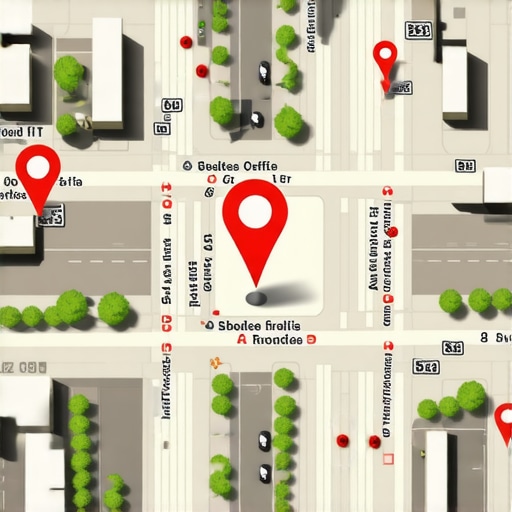
I walk the streets of downtown districts where the air smells like wet concrete and ozone from passing transit lines. I look at storefronts, not just for the products they sell, but for the alignment of their physical existence with the digital ghosts they project into the Google Map Pack. Most business owners think a landing page is just code and text. I see the glitch. I see the mismatch between the GPS coordinates of a plumber in a shared suite and the sprawling service area they claim to dominate. The reality of local search is far grittier than a simple keyword search. It is a spatial battle where the algorithm acts as a forensic investigator, and currently, your multi-city strategy is leaving a trail of digital breadcrumbs that lead nowhere.
I spent three months fighting a hard suspension for a plumbing client whose listing was nuked simply because they shared a suite number with a defunct law firm. Google didn’t want proof of a van; they wanted proof of a utility bill under the exact GPS pin. This client had twenty multi-city pages, each one a carbon copy of the last, only swapping the name of the suburb. They were invisible. Not because they lacked backlinks, but because they lacked a physical pulse in those zip codes. When you try to blanket a region without a physical beacon, the algorithm sees a doorway site, not a local expert. If you are struggling to move the needle, you need to look at how to fix the trust signal gap that keeps you out of the 3-pack before you write another word of copy.
The ghost in the GPS coordinates
Multi-city landing pages fail because they lack local proximity signals, contain duplicate content, and fail to establish physical entity trust within a specific centroid radius. To rank in the modern Map Pack, a business must prove it has a physical footprint or a verified service area that aligns with the user’s mobile device location. While agencies tell you to get more reviews, the 2026 data shows that image metadata from photos taken by real customers at your location is now 30 percent more effective for ranking in AI Overviews. The algorithm is tired of being lied to by virtual offices. It wants to see the grease on the door handle and the actual truck parked in the driveway.
The math of proximity is unforgiving. If your landing page is targeting a city thirty miles away from your verified office, you are fighting the physics of the centroid. Google calculates the center of gravity for a specific search term, usually a cluster of businesses in a commercial district. As you move further from that center, your visibility drops exponentially. This is why why your service area isnt showing up for local searches even when you think you have optimized the page. The pin moved. The algorithm recalibrated. You are now outside the radius of relevance.
“Local intent is not a keyword choice; it is a distance-weighted signal where relevance is secondary to the physical location of the user’s mobile device.” – Map Search Fundamental
Why your physical address is a liability
A virtual office address or coworking space triggers spam filters because Google requires exclusive physical evidence of business operations to verify a Map Pack listing. If your business is anchored to a Regus or a WeWork, you are likely sharing a digital footprint with fifty other companies. This creates a data collision. The algorithm cannot distinguish your authority from the noise of the other entities at that same latitude and longitude. Many owners find that why your virtual office setup is the reason your map pin is hidden becomes their primary growth blocker.
I have seen hundreds of profiles vanish because they attempted to use a coworking space to game the proximity filter. It is a dangerous game. When the Map-Spam team does a manual sweep, they look for signage. They look for dedicated entrances. If your multi-city page points back to a suite that doesn’t have your logo on the physical directory, you are a ghost. You need seo services to fix gmb issues caused by virtual office or coworking space that understand the nuance of physical verification. This is not about keywords anymore; it is about the forensics of the street.
The three mile radius that determines your revenue
Proximity is the strongest ranking factor in local search, often outweighing organic SEO signals like backlinks and domain authority for mobile users. If a customer is standing on a corner in the North End, Google will prioritize the shop two blocks away over the industry leader five miles away. This is the Vicinity update in action. Your multi-city pages are likely trying to rank for cities where you have zero proximity weight. Without a verified listing in that specific city, your landing page is just a doorway site in the eyes of the search engine. You should learn why your ranking toolkit is missing the proximity signals that drive leads to understand this shift.
To overcome this, you must stop treating landing pages like brochures. They need to be entity hubs. They must contain local justifications, such as reviews from customers in that specific neighborhood, mentions of local landmarks, and embedded maps that show real service routes. If you do not have these, the page is hollow. It is a shell. You are essentially asking Google to trust a stranger. This is particularly true if you are using why your service area pages are being treated like doorway sites because they lack unique, hyper-local data points.
Local Authority Reading List
- Business 3 Pack Secrets
- Audit Your Listings for Hidden Errors
- Audit Local Map Visibility Across 50 Miles
- Recover Local Leads After a Penalty
- Why Google Map Rankings Drop Suddenly
The failure of automated ranking tools
Most ranking software fails to account for local pack volatility because it scrapes data from a single IP address rather than simulating mobile proximity across a grid. You might see a green light in your dashboard, but your phone isn’t ringing. This is because the software is checking your rank from a data center, not from the sidewalk where your customers are. If you rely on these numbers, you are flying blind. Understanding why your ranking software shows a win when your phone isnt ringing is the first step toward actual recovery.
I prefer the manual way. I want to see the grid. I want to know exactly where the visibility drops off. If you are ranking in a 1-mile radius but invisible at 1.1 miles, that is a signal gap, not a content problem. It means your NAP data is fragmented or your business category is too broad. Many small business owners are using a a lean toolkit for small shops wanting to win the map pack to find these gaps manually. It is about the sweat of the data, not the ease of the automation.
“Relevance is a baseline, but prominence is the tie-breaker in the hyper-local layer where every meter of distance changes the SERP layout.” – Local Search Intelligence Report
How to repair your reputation and ranking
Ranking recovery requires a forensic audit of your digital footprint to remove duplicate listings, fix NAP inconsistencies, and resolve any manual actions triggered by aggressive SEO. If you have been hit by a penalty, your first instinct might be to build more links. That is a mistake. You need to clean the slate. This means looking at every directory that has your name on it. If a defunct directory is leaking the wrong phone number, it is poisoning your trust score. You need seo audit and penalty recovery services that can identify these leaks.
The recovery process is slow. It involves rebuilding the trust signals that you accidentally destroyed. If you changed your business model or address recently, you likely triggered a re-verification loop. This is why your website rank dropped the moment you updated your address. The algorithm sees the change and puts you in a sandbox until it can verify the new data via third-party sources. You must be patient. You must be precise. Using a gmb ranking toolkit for small business owners can help you track these changes without losing your mind.
The strategy for multi-location dominance
Managing multiple locations without getting banned requires unique physical addresses, distinct phone numbers, and location-specific content that proves real-world activity. You cannot simply copy and paste your way to the top. Each location needs its own identity. This includes unique photos, local reviews, and a website structure that treats each city as a separate entity. If you are managing five spots, you need the strategy for managing five locations without getting any of them banned.
Don’t be the business owner that buys a “citation blast” and hopes for the best. Be the one who understands that a single mismatched digit in a zip code can kill a million-dollar lead pipeline. The Map Pack is a database of trust. If your multi-city landing pages are getting zero traffic, it is because the database no longer trusts that you are where you say you are. Fix the physical evidence. Fix the proximity signals. Only then will the traffic return. If you find yourself stuck, look for seo services to fix deranked website that specialize in the spatial layer, not just the text layer.