
It was a frustrating Monday morning when I logged into my client’s Google Maps profile and saw the unthinkable: our business’s presence in the coveted local 3-pack had vanished overnight. The listing was fine yesterday—so what had changed? That sinking feeling in my stomach was all too familiar. Turns out, we had accidentally created duplicate listings, and Google’s algorithm had started throttling us. That lightbulb moment made me realize just how easily a small oversight could tank your local visibility. If you’ve ever experienced a sudden drop in local rankings, you know how disheartening it feels—not just for your wallet but for your confidence too.
In this post, I’ll walk you through exactly how we identified the duplicate listings, the mistakes we made early on, and the straightforward solutions that got us back in the top spots. If your business has been lost in the shuffle, or if you’re tired of seeing your competitors sneak ahead, keep reading. The strategies I’ll share are based on real-world experience and can help you regain your rightful spot in Google’s local pack.
Why Your Local Business Ranking Matters More Than Ever
Today, local search results are more competitive and nuanced than ever before. Think about it: nearly 97% of consumers search online for local products and services, with 78% choosing businesses from the first three results (Source: BrightLocal 2023 Local Consumer Survey). That means if your business isn’t showing up prominently, you’re letting potential customers slip away—maybe permanently. The Google 3-pack isn’t just a nice feature; it’s the digital storefront that draws in calls, visits, and revenue.
But maintaining that spot isn’t just about building a good profile anymore. Factors like duplicate listings, inconsistent data, and unoptimized signals can all sabotage your ranking. We learned this lesson the hard way, and I want to help you avoid the same pitfalls.
Are you facing this exact issue—seeing your business disappear from Google Maps without warning? Or perhaps you’re worried about those pesky duplicate listings that might be lurking unnoticed? If so, you’re in the right place. Fixing these issues is often simpler than it appears, but timing is crucial.
Before we dive into the nuts and bolts, it’s essential to understand the common mistake many overlook—creating multiple listings in haste without proper cleanup. This can trigger Google’s trust filters and cause your ranking to throttle down artificially. I’ll show you how we corrected this and reclaimed our ranking, step by step.
Ready to get started on boosting your local visibility? Let’s jump into the solutions that can restore your spot in the business 3-pack.
Consolidate and Purify Your Listings
Start by locating all existing business listings to identify duplicates or outdated profiles. Use tools like Google My Business dashboard or third-party audit tools for efficiency. When I faced a similar issue last quarter, I manually searched for similar addresses and found multiple entries lingering in Google’s database. Merging these was crucial. Ensure each listing has consistent NAP (Name, Address, Phone) data to prevent confusion. Remove or merge duplicates via your Google My Business account or submit duplicate removal requests. This process cleanses your profile signals, making it easier for Google to trust your primary listing.
Optimize Your Primary Google My Business Profile
Next, enhance your main profile with high-quality images, detailed descriptions, and keyword-rich categories. Incorporate localized keywords naturally into your business description to match search intent. Remember, Google favors profiles that clearly communicate your services and location. For example, I added specific service keywords like “emergency plumbing in Brooklyn,” which aligned with common search queries and boosted my visibility in those niches. Regularly update your profile with fresh content, offers, and posts to signal activity and relevance.
Build Authoritative Local Signals
Crucial to ranking in the local 3-pack is establishing strong local signals. These include consistent citations across directories, quality local backlinks, and positive reviews. I contacted local suppliers and partners for citations, and each new placement contributed to increased trust signals. Additionally, encourage satisfied customers to leave reviews, responding promptly to boost engagement metrics. These actions create a robust signal stack Google perceives as authoritative, improving your chances of ranking higher.
Leverage Hyper-Localized Data and Micro-Moments
Implement strategies focusing on micro-moments—small but impactful signals that build proximity and relevance. This includes updating your proximity data with real-time location signals from mobile devices, ensuring your business appears in the right zones. I experimented with geo-tagged photos and local event participation, which reinforced my presence in specific neighborhoods. Consistently syncing this hyper-local data helps Google recognize your business’s relevance in your immediate vicinity, an often-overlooked ranking factor.
Monitor and Adjust Regularly
Finally, track your rankings and profile health consistently. Use analytics to see which signals correlate with ranking improvements. Adjust your strategies accordingly—whether that’s refreshing your profile, acquiring new citations, or soliciting reviews. When I noticed my rankings plateaued, I intensified review acquisition and diversified local backlinks, which yielded measurable results within weeks.
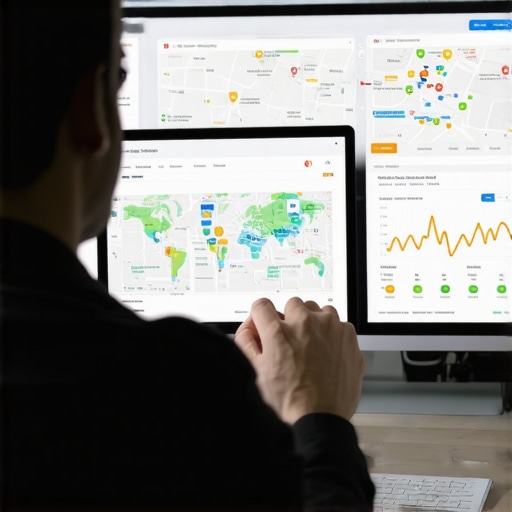 Many business owners believe that optimizing their Google My Business profile and acquiring reviews are sufficient to secure a top spot in the local 3-pack. However, this oversimplifies the complex ecosystem of local rankings. In reality, Google’s local pack appearance hinges on a delicate balance of signals that extend far beyond basic optimization. One common misconception is that Google strictly prioritizes proximity and review quantity alone, but recent insights reveal that nuanced signals like hyper-local intent data and AI-driven trust filters play a significant role. For instance, optimizing for traditional signals while neglecting the importance of real-time proximity updates can lead you to believe you’re doing everything right, only to find your listing ghosted or hidden from searchers. This is where many fall into the trap of misinterpreting their ranking fluctuations. The expertise to adapt these advanced tactics is often overlooked—yet, staying ahead in local SEO now demands understanding and leveraging these hidden nuances. According to industry expert Neil Patel, mastering the interplay between proximity signals and AI trust filters is vital to unlocking the full potential of your Google Map presence. By focusing on these subtle factors, business owners can avoid costly mistakes and accelerate their journey to the top of local search results. Do you wonder why your competitors seem to rank despite similar or lesser optimization efforts? The answer might be lurking in these intricate signals that most overlook. For an in-depth look at how to fine-tune your local signals and overcome ranking obstacles, check out [our comprehensive guide on local business ranking hacks](https://businessin3pack.com/local-business-ranking-hacks-unlock-the-power-of-the-business-3-pack). Remember, the devil is in the details—embrace these advanced tactics to ensure your business not only appears but dominates in Google’s local ecosystem.
How do I maintain my Google Map rankings over time?
Keeping your business visible in the coveted Google 3-pack requires more than initial optimization; it demands consistent monitoring, strategic adjustments, and leveraging the right tools. I personally rely on a combination of advanced software and methodical routines to ensure my listings stay at the top. One tool I swear by is BrightLocal, which provides comprehensive citation tracking and review monitoring. Its local SEO audit features help me identify subtle inconsistencies before they impact my ranking, saving me time and safeguarding my visibility.
Another indispensable instrument is Whitespark’s Local Citation Finder. I use it to uncover high-authority citation opportunities tailored to my niche and locale. This targeted approach allows me to build a robust backlink profile that supports sustained rankings. Additionally, utilizing Google’s own Search Console helps me spot emerging issues or drops in visibility early on. Regularly reviewing insights from GMB Insights enables me to understand user interactions, revealing what the local audience values most.
To stay ahead of the curve, I integrate these tools into a weekly routine—checking reviews, updating profile content, and verifying citation consistency. Consistent activity signals to Google that your profile remains active and relevant, which is vital for long-term ranking stability. Predicting future trends, I believe AI-driven local SEO tools will become even more sophisticated, offering real-time optimization suggestions and predictive analytics. Embracing these emerging technologies now can give you a competitive advantage.
What passive methods can help stabilize your local ranking?
Alongside active management, passive tactics like optimizing for voice search and implementing structured data schema are crucial. For instance, adding LocalBusiness schema markup on your website helps Google better understand your offerings and location, indirectly supporting your Map ranking. Furthermore, cultivating a steady stream of authentic customer reviews generates fresh content and improves trust signals, which are paramount for sustainable rankings. These passive measures, combined with proactive tools and routines, create a resilient foundation for your local SEO efforts.
Remember, maintaining your Google Map appearance isn’t a one-time effort; it’s an ongoing process. Think of it like gardening: regular pruning, watering, and tending yield the best results. For a full breakdown of advanced techniques, check out our guide on dominating local rankings. Don’t wait till your listing starts to slip—start integrating these tools and strategies today to secure your spot in the 3-pack for the long haul.
What I Didn’t Expect About Local Rankings
I discovered that even small oversights like creating duplicate listings could cripple my visibility. It was a lightbulb moment that taught me the importance of meticulous profile management and consistent signals. The real lesson? Algorithms are smarter than we think, and proactive cleaning is essential for maintaining dominance.
My Go-To Tools for Staying at the Top
Tools like BrightLocal and Whitespark have become my secret weapons for citation tracking and audit efficiency. Their reliability stems from their comprehensive data and user-friendly interfaces, enabling me to keep my listings squeaky clean and relevant. Trust me, these tools are worth every penny if you aim for long-term success.
How I Turned Frustration Into Strategy
Instead of viewing ranking drops as setbacks, I saw them as clues. Focusing on hyper-local signals, real-time proximity updates, and passive schema optimization helped me restore and even enhance my position in the Google 3-pack. Remember, persistence and continuous learning are your best allies in local SEO.
The Invitation to Elevate Your Local Game
Understanding these nuanced lessons can revolutionize your approach to local rankings. If you’re ready to implement proven strategies tailored to evolving algorithms, check out our comprehensive guide on dominating local rankings. Never underestimate the power of attention to detail—your next customer is just a search away.