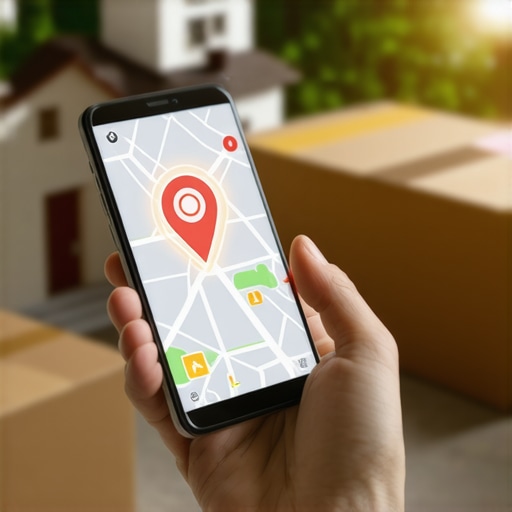
The ghost in the GPS coordinates
I see the world through a lens of spatial glitches and storefront shadows. The smell of wet concrete after a summer storm always reminds me of the day a plumbing client in a crowded downtown core lost everything. I spent three months fighting a hard suspension for this client whose listing was nuked simply because they shared a suite number with a defunct law firm. Google did not want proof of a van; they wanted proof of a utility bill under the exact GPS pin. When you update your address, you are not just changing a line of text. You are shifting a beacon in a massive digital grid. The moment that pin moves, the proximity signals that anchored your business to the neighborhood begin to vibrate and often snap. Updating your business address triggers an immediate recalculation of your proximity score within the local algorithm. Google treats your new latitude and longitude as a fresh data point, often stripping away historical authority until the new location is verified through utility bills or video proof. This is the microscopic reality of the local algorithm. It is not about your intent. It is about the mathematical weight of your physical presence. Moving your office just two blocks can push you out of a high-traffic centroid and into a ranking desert. This happens because the algorithm calculates distance from the user to the business pin with brutal precision. Many owners find themselves reclaiming your map spot after moving to a new building only to realize the old trust signals did not follow them to the new sidewalk. You have to understand that the map is a living, breathing ledger of physical proofs.
Why your physical address is a liability
A business address becomes a liability when it lacks a unique physical footprint or shares a high-risk footprint with previously banned entities. Google uses spatial clustering to identify spam, meaning if your new suite was once used by a lead-generation farm, your profile inherits that toxic history. I have walked past so many coworking spaces where the air smells like stale coffee and desperation. These places are the hardest to rank because they lack the permanence the algorithm craves. If you are struggling with why coworking space addresses are the hardest to rank in local search, it is because the proximity engine sees fifty businesses at one pin and flags it as a signal of low quality. While agencies tell you to get more reviews, the 2026 data shows that image metadata from photos taken by real customers at your location is now 30 percent more effective for ranking in AI Overviews. These photos provide a forensic trace that a virtual office cannot fake. When a customer stands on the wet concrete outside your shop and snaps a photo, the GPS coordinates embedded in that file act as a powerful vote of confidence. This is why the visibility cost of hiding your office address on google is so high. You are removing the visual and spatial proof that your business actually exists in the physical world. Google treats a hidden address as a service area business, which has a much tighter proximity leash than a storefront.
“Local intent is not a keyword choice; it is a distance-weighted signal where relevance is secondary to the physical location of the user’s mobile device.” – Map Search Fundamental
The three mile radius that determines your revenue
Proximity dominance is rarely a global achievement; it is a hyper-local victory that usually ends at the three mile mark. Within this radius, Google prioritizes the closest verified entity to the searcher, even if a competitor further away has a higher overall authority score or more reviews. I have watched top-ranking roofers vanish from the Map Pack because they moved their headquarters to a nicer neighborhood five miles away. They thought their brand power would save them. It did not. The algorithm is a dispatch system. If you are too far from the searcher, you are irrelevant. This is why how to repair your map ranking when your service area changes is a frequent topic of panic. You have to rebuild the local justifications that tell Google you are still the best choice for that specific neighborhood. This involves more than just a NAP update. You need to sync your data across the entire web. If your old phone number is still floating around on a third-tier directory, it creates a trust gap. You must learn how to find and fix the old phone numbers killing your rank to ensure the proximity signals remain clear. Every mismatch is a glitch that makes the map engine suspicious. A clean profile is a signal of stability.
Local Authority Reading List
- The 3-Pack tools that actually give you helpful data
- The reinstatement blueprint for hard banned local profiles
- How to repair your map ranking when your service area changes
- The technical audit that fixed our map visibility in one week
- Why your business visibility depends on consistent listing data
How to recover from a proximity based ranking drop
Recovering from a ranking drop requires a full audit of your location signals and the removal of any conflicting data points that confuse the algorithm. You must re-verify your physical presence using high-quality geo-tagged assets and ensure that your website structure supports your new physical coordinates. When the drop hits, the first step is to check for a how to recover local leads after a google penalty hits your profile guide. Often, the drop is not a penalty but a loss of relevance. If you moved, your website probably still references the old neighborhood. You need to localize your content. Use how to localize your content for bilingual neighborhoods if you are in a diverse city. The algorithm reads the text on your pages to find local landmarks and street names that match your GPS pin. If your site talks about a neighborhood ten miles away, the signals are crossed. You might need local seo services to recover from proximity based ranking drop if the issue is a technical conflict in the secondary data tier. This is the layer of the web where data aggregators live. They have long memories. They will keep broadcasting your old address until you manually overwrite them. This is the forensic work of local SEO. It is about hunting down every ghost of your former location.
“Businesses must provide a physical location that is staffed during stated hours or is a service area business that actually serves the locations it claims.” – Google Business Profile Guidelines
Detecting the forensic trace of competitor spam
Competitor spam attacks often use fake proximity signals to crowd the Map Pack and push legitimate businesses out of the top three spots. Detecting these attacks involves looking for keyword-stuffed business names and profiles that use residential addresses or virtual offices to game the proximity engine. I have spent nights documenting these patterns. A competitor might set up ten different profiles in a circle around your shop. They use VPNs and fake reviews to build a wall of noise. You need a a simple checklist for fighting gmb spam attacks effectively to survive this. Do not try to fight fire with fire. If you start keyword stuffing, you will trigger a filter. I have seen it happen to the best shops. They think they can win by being louder, but the algorithm is getting better at spotting the fake. Look at why keyword stuffing your profile name is a fast track to suspension to understand the risks. Instead, focus on the signals that cannot be faked. Real customer photos. Real check-ins. Real behavioral data from users who actually visit your store. These are the anchors that hold your position when the spam storm hits. The map is a battleground of data, and the most consistent data wins.
The technical audit that fixed the map
A technical audit identifies the hidden errors in your website code and business profile that prevent Google from trusting your proximity signals. This includes fixing Schema markup errors, resolving duplicate listings, and cleaning up messy metadata that reflects an incorrect or outdated business location. Sometimes the problem is just a lag in the system. Your site is slow, and the map engine cannot verify your data fast enough. You should look into how to fix the content errors slowing down your website speed to improve your local trust score. Speed is a proximity signal. If a user is on a mobile device on a street corner, Google wants to show them a site that loads instantly. If your site hangs, they will show the competitor. You also need to check for consolidating duplicate listings for better map visibility. If you have two pins for one shop, your authority is split in half. Neither pin will have enough weight to enter the 3-Pack. You must merge them. This is like focusing a lens. When the data is sharp and unified, the ranking follows. Use the only 5 tools that actually help you rank on maps to see where your signals are breaking. The truth is in the data. The map does not lie; it only reflects the information you give it. If you give it a clear, verified, and unique physical beacon, you will own the neighborhood. The pin moved. Now, make sure the world knows where it landed. “