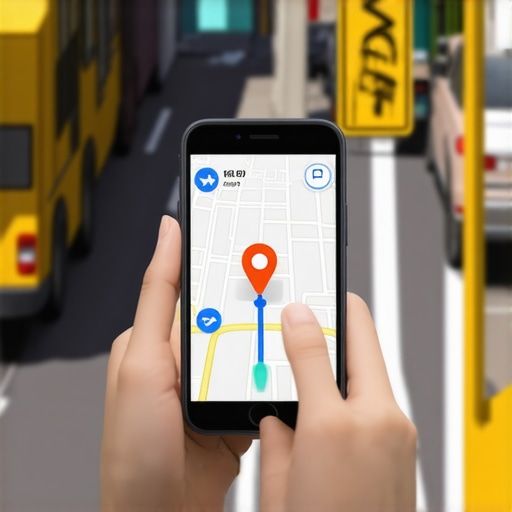
Why Your Google Maps Audit Is Missing These 4 Visibility Killers
If you are still auditing your Google Business Profile by checking your NAP (Name, Address, Phone) consistency and making sure you have a few keywords in your description, you aren’t just behind the curve – you’re invisible. In the hyper-competitive landscape of 2025 and 2026, the “standard” optimization checklist has become the bare minimum. It no longer guarantees a spot in the coveted Local 3-Pack; it merely grants you permission to compete.
The reality is that Google’s local algorithm has undergone a massive technical evolution. We have moved beyond simple text matching and proximity. Today, visibility is determined by a complex interplay of technical signal integrity, spatial data, and real-world behavioral pings. Most google business profile audit processes performed by agencies today are fundamentally flawed because they ignore the underlying technical infrastructure that Google now uses to verify and rank local entities. If your rankings are stagnant despite “doing everything right,” you are likely suffering from one of four advanced visibility killers that traditional audits fail to detect.
Killer #1: Technical Latency and Core Profile Speed
Most SEO professionals understand website speed, but few realize that “Profile Speed” is now a critical ranking factor for Google Maps. In the 2026 search ecosystem, Google prioritizes profiles that can serve data instantly across its multi-device ecosystem – from mobile devices and desktop browsers to in-car navigation systems and AR wearables. When we talk about a google business profile audit, we must look at technical latency.
Technical latency in a GBP context refers to the delay in data synchronization between your profile updates and Google’s edge servers. If your profile data – such as updated service menus, high-resolution images, or holiday hours – takes too long to propagate or fails to sync across the Google Maps API, your profile is flagged for “low data integrity.” Google views high-latency profiles as unreliable sources of information for the end-user. This often results in a “ghosting” effect where your business appears intermittently or drops out of the map pack during peak search hours.
To identify if latency is killing your visibility, you need to use a sophisticated google maps rank tracker that monitors ranking fluctuations in real-time. If you notice that your rankings drop significantly during periods of high local search volume, it is a telltale sign that your profile’s data delivery is failing under load. This is often caused by bloated, non-optimized image files or third-party API integrations that are poorly configured. If your data isn’t served at lightning speed, Google will simply bypass you for a more “responsive” local competitor.
Fixing these issues requires a deep dive into your profile’s technical backend. You must ensure that every asset uploaded to your profile is optimized for the “2026 Core Speed” standards. Failure to do so means you are likely to fix your mappack entry: 4 reasons you’re ghosted in 2026 only to find the same issues recurring weeks later. A modern audit must measure the time-to-first-byte (TTFB) of your profile’s media assets and the synchronization speed of your attribute updates.
Killer #2: The 2026 LiDAR Patch and Visual Spatial Data
One of the most significant shifts in local SEO is Google’s move from 2D image processing to 3D spatial awareness. This shift, often referred to by industry insiders as the “LiDAR Patch,” has fundamentally changed how Google evaluates the “Visual Trust” of a business. Google is no longer just looking at whether you have photos; it is using LiDAR data from Street View cars and user-contributed “Live View” data to build a three-dimensional map of your business’s physical presence.
If your google business profile audit only checks for the presence of photos, you are missing a massive ranking signal. Google’s AI now analyzes the spatial data within your photos to verify that the interior and exterior of your business match the physical coordinates provided. “Flat” photos – those taken with older cameras without depth sensors or photos that have had their metadata stripped – are increasingly being discounted. In 2026, Google prioritizes “AR-ready” visual content. This includes 360-degree panoramas and photos that contain rich spatial metadata that can be integrated into Google’s Augmented Reality overlays.
Why does this matter for your ranking? Because if Google’s system cannot reconcile your uploaded photos with its own LiDAR-mapped environment, it creates a “spatial mismatch” error. This error acts as a massive visibility killer. You might find that your rankings have plummeted without any changes to your text or categories. This is specifically why your local business ranking dropped in the 2026 LiDAR patch. Google is essentially saying: “I don’t trust that this business looks like this at this location.”
To combat this, your audit must include a “Visual Spatial Audit.” You need to ensure your photography strategy includes:
- High-dynamic-range (HDR) images with intact EXIF and GPS data.
- 360-degree virtual tours that allow Google’s AI to “walk” through your space.
- Exterior shots that clearly show the storefront in relation to neighboring landmarks, helping Google’s LiDAR system anchor your location.
Killer #3: Missing Passive IoT and Sensor Signals
The “Prominence” pillar of the Google Maps algorithm has evolved into something much more sophisticated than just “mentions on the web.” In 2025 and 2026, Google heavily relies on “Passive Signal Fixes” to verify the real-world popularity and activity of a business. These signals are derived from the Internet of Things (IoT) – specifically, mobile pings, Bluetooth beacons, and Wi-Fi probe requests from users’ smartphones.
Google knows, with terrifying accuracy, how many people are physically entering your store, how long they stay, and even if they are “window shopping” or making a purchase based on their movement patterns. If your google business profile seo strategy doesn’t account for these micro-location pings, you are fighting a losing battle. If your digital profile says you are a popular, top-rated plumber, but Google sees zero mobile devices lingering at your “office” location or zero devices traveling from your office to customer locations, it identifies a “Signal Gap.”
This is a common reason why established businesses suddenly lose their rankings. If Google’s sensor data doesn’t match your claimed prominence, the algorithm assumes you are either a “ghost kitchen” or a business using fake engagement tactics. This is one of the primary 4 reasons your business 3 pack spot just disappeared [2026]. You cannot “fake” these signals with traditional SEO; they must be cultivated through real-world activity and verified by local seo ranking tools that can track these prominence shifts.
A comprehensive audit must look for “Micro-Location Discrepancies.” Are you encouraging customers to check in? Is your guest Wi-Fi linked to your Google Business Profile? Are you utilizing Google’s “Store Visits” metrics to their full potential? Without these passive signals, your profile lacks the “Real-World Authority” required to dominate the map pack. You need to use local seo software that monitors not just your position, but your “Signal Strength” relative to competitors who may have higher foot traffic or better IoT integration.
Killer #4: AI Review Filtering and “Banned” Engagement Tactics
The days of “Review Management” being a simple game of getting more 5-star ratings are over. Google’s 2026 AI update has introduced “Smarter Ratings,” a system that uses deep learning to analyze the sentiment, velocity, and – most importantly – the *context* of every review. This has led to the rise of “Review Ghosting,” where customers leave legitimate reviews that simply never appear on the profile.
Modern google business profile optimization requires an understanding of what Google now considers “Banned Engagement.” There are five specific tactics that the AI now detects and uses to shadow-ban profiles:
- Inorganic Velocity: A sudden spike in reviews that doesn’t correlate with your business’s known foot traffic or seasonal trends.
- Sentiment Extremism: Reviews that use overly “marketing-heavy” language or repetitive keywords that look like they were written for an algorithm rather than a human.
- Device Clustering: Multiple reviews coming from the same IP address or, more sophisticatedly, from devices that have similar “digital fingerprints” and haven’t physically visited the business.
- Reviewer Movement History: Google now discounts reviews from users whose GPS history doesn’t show them actually being at or near the business location during the time of the service.
- Cross-Platform Mismatch: If you have 500 reviews on Google but only 2 on Yelp and Facebook, Google’s AI flags the Google reviews as potentially manipulated.
A modern google business profile audit must include a “Review Integrity Check.” It’s not enough to count the stars. You must analyze the “Reviewer Trust Score” of the people leaving you feedback. If your profile is being hit by AI filtering, your local map pack seo will suffer regardless of how many keywords you stuff into your business name. You need a google review strategy that prioritizes high-trust reviewers – users who have a long history of contributing to Google Maps and whose physical movements verify their reviews.
How to Run a 2026-Ready Google Business Profile Audit
To ensure your business stays ahead of these visibility killers, your audit process must evolve. You can no longer rely on manual checks or outdated spreadsheets. You need a technical approach that mirrors how Google actually sees your business. Follow this quick checklist for a future-proof audit:
- Audit Data Latency: Use a google maps rank tracker to identify if your rankings fluctuate based on time-of-day or server load.
- Analyze Spatial Integrity: Check your profile for high-resolution, LiDAR-compatible imagery. Replace any “flat” or stock-looking photos with geo-tagged, HDR content.
- Verify IoT Signals: Ensure your physical location is generating enough mobile pings to justify your ranking. If not, consider local engagement campaigns to drive physical traffic.
- Scrub Review Patterns: Look for signs of “Review Ghosting.” If legitimate reviews are being filtered, you may need to adjust your google business profile optimization strategy to focus on reviewer quality over quantity.
For those who want to automate this process, utilizing the simple profile audit tool that finds hidden ranking errors is the most efficient way to catch these technical glitches before they tank your revenue. For a more comprehensive approach to dominating your local market, many professionals turn to SEO Viper Tools for advanced google business profile optimization and monitoring.
Conclusion: Moving Beyond the Basics
The “Local SEO” of yesterday is dead. In a world of LiDAR patches, IoT sensor data, and AI-driven review filtering, a basic google business profile audit is an exercise in futility. To truly rank higher on google maps, you must address the technical “visibility killers” that are hiding in plain sight. You must treat your Google Business Profile not just as a listing, but as a technical asset that requires constant optimization and signal monitoring.
Stop using outdated checklists that focus on the surface level. It is time to dig into the technical integrity of your profile. If you are ready to stop guessing and start dominating, explore our Business 3 Pack Secrets: How to Dominate Local Rankings Now. The map pack is shifting – make sure you aren’t the one left behind in the 2026 update.