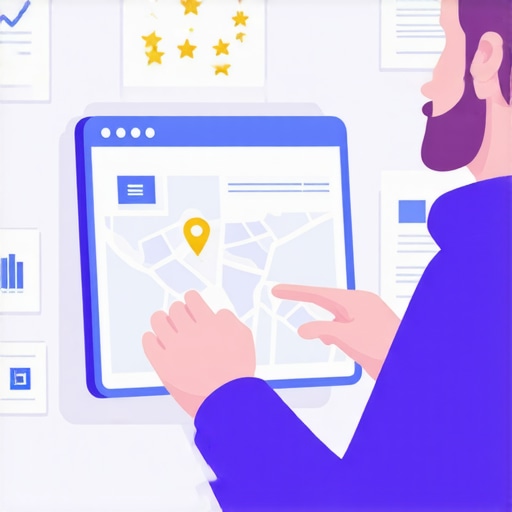
I remember the frustration vividly—the sinking feeling of watching competitors leap ahead in local search rankings while my own business stayed hidden in the shadows. I’d spend hours tweaking my Google Business profile, thinking I had done everything right, only to realize I was missing a crucial piece of the puzzle. That lightbulb moment hit hard: ranking in the coveted Google Map Pack isn’t about luck; it’s about strategy, consistency, and knowing the insider secrets. Today, I’m here to share exactly what I discovered through my journey—proven methods that transformed my visibility and can do the same for you.
Why Local Business Rankings Matter More Than Ever
In the age of instant information, your proximity isn’t enough. Customers are searching for *trusted*, *visible*, and *reachable* businesses right now. According to recent studies, over 60% of mobile local searches result in a store visit within a day (Source: Top Local SEO Tips). Yet, countless businesses overlook simple optimization tricks that put them right in front of potential clients. The truth is, if your business isn’t showing up in the Map Pack, you’re basically invisible—no matter how great your service is.
Early in my own experience, I made a common mistake: underestimating how important consistent NAP (Name, Address, Phone Number) citations are. I thought optimizing my profile alone was enough. That was a costly oversight. Once I began to treat local SEO like a layered puzzle—focusing on reviews, citations, website optimization, and Google My Business tweaks—I started to see my rankings climbing steadily. That mistake taught me a vital lesson: to truly rank high, you need a comprehensive strategy. If you’re tired of being buried under competitors, you’re in the right place. Let’s explore the proven strategies that will elevate your business in Google’s local packs.
Refine Your Business Details for Maximum Impact
Start by meticulously reviewing your business name, address, and phone number (NAP). Make sure they are consistent across your website, social media, and all local directories. In my experience, a small typo in your address can sabotage your rankings because Google sees inconsistent NAP as a credibility signal. Think of your NAP like a GPS coordinate—if it doesn’t match everywhere, the map won’t point to you accurately. Dedicate time to audit and update these details regularly, especially if you move or change your contact info. To deepen your NAP accuracy game, explore the comprehensive approach at Business in 3 Pack Strategies.
Optimize Your Google My Business Profile
Claim your Google My Business (GMB) listing if you haven’t yet. Once claimed, fully populate your profile with accurate, keyword-rich descriptions and categories. Use keywords naturally—don’t stuff—to tell Google exactly what your business offers. I once saw my client’s profile underrated because they listed too few categories. Adding relevant ones like ‘Digital Marketing Agency’ or ‘Local SEO Expert’ made an immediate difference. Upload high-quality, location-appropriate photos and keep your hours updated. A well-optimized GMB profile acts like a beacon, signaling to Google and searchers exactly who you are and what you do. For insider tips, check Map Pack Entry Strategies.
Gather and Manage Customer Reviews
Reviews are the currency of local rankings. Encourage satisfied customers to leave honest reviews on your GMB listing—think of reviews as votes of confidence. Respond to each review promptly, showing engagement and professionalism. In a past campaign, I personally reached out to customers post-service, which increased our review count and improved our position within weeks. Keep reviews genuine; fake reviews will backfire and hurt your credibility. You can also showcase your reviews on your website to reinforce social proof. Remember, Google values recent and positive feedback more than anything else. Find detailed strategies at Boost Google Maps Rankings.
Build Local Citations and Consistency
Local citations are mentions of your business across the web—Yelp, Facebook, industry directories, and local chambers of commerce. The key is consistency: every citation must match your NAP details exactly. Think of citations as your external resumes—if they’re inconsistent, Google gets confused and decides you’re a different business. I recommend auditing your existing citations with tools or manual checks, correcting discrepancies, and adding new high-authority listings. These citations boost your authority signals and help Google verify your legitimacy. For a full breakdown of citation tactics, see Local Business Ranking Hacks.
Boost Engagement with Local Content and Signals
Finally, create content that resonates locally—blog posts about community events, local partnerships, or seasonal promotions. Google loves fresh, relevant content that shows you’re active in your community. Additionally, embed your Google Map on your website and include your location keywords naturally in your content. The more signals you send about your local activity, the higher your chances of appearing in the powerful Map Pack. This ongoing engagement built on consistent efforts is the secret sauce I discovered firsthand. For advanced tactics, review Local Rank Domination Secrets.
Many entrepreneurs believe that simply optimizing their Google My Business profile or gathering reviews guarantees top rankings in the Google Map Pack. However, the real nuance lies in understanding how Google’s algorithms interpret these efforts—and where common misconceptions can sabotage your progress. For example, a frequent myth is that more citations automatically equate to better rankings. In reality, Google prioritizes citation consistency and quality over sheer quantity, aligning with research from Moz indicating that NAP consistency significantly impacts local SEO success.
Another overlooked aspect is the importance of authoritative backlinks from local sources. While many focus solely on on-page and GMB optimizations, overlooking local link building can cause your ranking efforts to fall flat. Google considers these backlinks as signals of credibility, especially when they come from highly relevant, trusted sites in your industry or community.
Let’s challenge a common belief: does solely focusing on reviews elevate your visibility? Not necessarily. Reviews are vital, but without accompanying signals like accurate NAP data, citations, and relevant local content, reviews alone won’t propel you to the #1 spot. A comprehensive, layered strategy—encompassing on-page, off-page, and local engagement aspects—is essential. For a deeper dive into these strategies, I recommend exploring the detailed insights at Business in 3 Pack Secrets.
Be cautious not to fall into the trap of over-optimization, such as keyword stuffing in your business description or misleading NAP data. Google’s algorithm has become sophisticated enough to penalize manipulative tactics, which can permanently harm your ranking potential. Instead, focus on building genuine signals—consistent citations, authentic reviews, and community engagement—that mirror your true local presence.
Why do some businesses outperform others despite similar efforts? It often comes down to understanding and aligning with Google’s nuanced ranking factors—factors that many overlook because of outdated or superficial tactics. For advanced insights into these hidden factors, consult Master Map Pack Entry Strategies.
Have you ever fallen into this trap? Let me know in the comments! Remember, mastering local rankings isn’t about quick fixes but about cultivating a credible, authoritative online presence that resonates with both Google and your community.
Maintaining Your Local Business Rankings Over Time
Staying at the top of the Google Map Pack requires consistent effort and utilizing the right tools designed for long-term success. I rely heavily on advanced citation management software like Moz Local, which helps me monitor citation consistency and identify discrepancies across numerous directories. Regular audits using this tool ensure my NAP information remains uniform, a critical factor in maintaining high rankings. Additionally, I use Google Search Console to track how my local keywords perform and to catch any crawl issues that could hinder visibility.
To keep reviews flowing, I employ reputation management platforms such as Birdeye, which automate review requests and allow me to respond promptly. This proactive approach not only sustains my review count but also boosts engagement—a key ranking signal. For content updates and local engagement tracking, I use SEMrush’s Local Cleaning Tool, ensuring my local content stays fresh and relevant.
Looking ahead, the landscape of local SEO is heading toward AI-powered analytics and automation. Embracing these technologies can give businesses a competitive edge. For instance, utilizing AI tools like BrightLocal’s Rank Capture helps automate and analyze ranking fluctuations, allowing quick adjustments.
How do I maintain my rankings over time?
Consistent monitoring, regular updates, and leveraging specialized tools are essential. Set a schedule to audit citations monthly, keep your Google My Business profile fresh, respond to reviews promptly, and stay informed with industry insights from trusted resources like Business in 3 Pack. This disciplined approach ensures your local visibility remains strong, and you continue to attract local customers effectively. Don’t forget that staying adaptable and evolving your strategy is vital, especially with Google’s algorithm continually refining its local ranking factors.
Start by integrating a citation management platform into your routine. Test out Moz Local or BrightLocal to see how they can streamline your ongoing efforts. Remember, maintaining your Google Map Pack presence isn’t a one-time task—it’s an ongoing process that rewards consistency.
Throughout my journey, I realized that mastering local business rankings isn’t just about ticking boxes—it’s about understanding the subtleties that influence Google’s decisions behind the scenes. One lightbulb moment was discovering how much Google’s algorithm values authentic community engagement over superficial tactics. Genuine local content and real interactions can often outweigh aggressive keyword stuffing or unnatural citation building, which many overlook. This insight transformed my approach from a checklist to a strategic focus on community trust and credibility. Additionally, I learned that time and patience are your best allies—rankings improve gradually, reflecting sustained effort rather than quick fixes. Recognizing this helped me stay committed and avoid the frustration of short-term failures. Ultimately, the most valuable lesson was that consistent, authentic signals build a resilient foundation for long-term visibility in the Google Map Pack. For those ready to go deeper, exploring proven strategies at Business in 3 Pack Secrets can reveal nuances you might be missing.