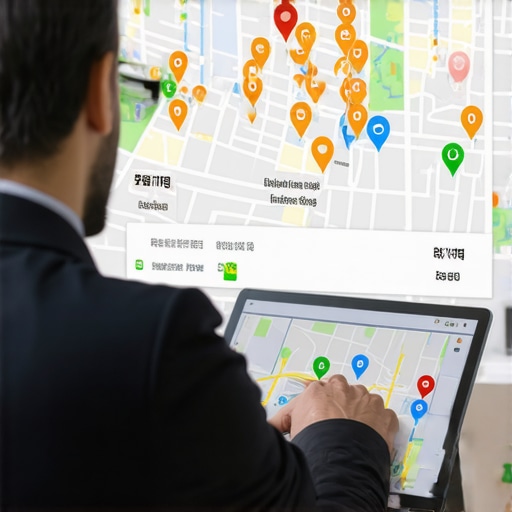
Ever spent hours trying to find that perfect local coffee shop, only to realize it’s buried beneath pages of search results? I’ve been there. I remember one frustrating morning when I desperately needed a reliable plumber and couldn’t even find a decent listing on Google. That moment was a lightbulb—if I wanted my business to be found easily, I had to crack the code of the local pack rankings. And believe me, it’s not about luck; it’s about strategy.
Why Local Pack Visibility Matters More Than Ever
In 2025, the game has changed. Consumers are more reliant on local searches than ever before. According to recent stats, over 70% of mobile searches lead to a visit to a store within 24 hours. That’s a huge opportunity, but only if your business pops up in that all-important Google Local Pack. Missing out means lost revenue—and that’s not a risk you can afford today. I’ve seen countless small business owners overlook the importance of local SEO, only to watch competitors dominate the map. It’s time to level the playing field.
Is Local Pack Optimization Actually Worth the Hype?
When I first started, I thought, “Does this really matter?” I made the mistake of ignoring Google My Business and relying solely on traditional SEO. Big mistake. Early on, I overlooked the critical importance of NAP consistency (name, address, phone number). That one mistake cost me a lot of potential customers. The truth is, local SEO isn’t just hype; it’s a proven way to get your business in front of people actively looking for your services. If you’re wondering whether it’s worth the effort, know that local pack visibility can significantly boost foot traffic and online inquiries. Want to get serious about it? Let’s dive into how you can start climbing those rankings today.
If you’re tired of being invisible in your local market and ready to turn searchers into customers, stay tuned. I’ll guide you through actionable strategies that helped me and countless others get their spot in the coveted Google Local Pack. For more expert tips, check out this comprehensive guide to dominate local search rankings.
Have you struggled with getting your local business noticed? Drop a comment or reach out. I’ve been there, and I’ve got solutions that work.
Optimize Your Google My Business Profile
First, claim and verify your Google My Business (GMB) listing if you haven’t already. Ensure all details are accurate and up-to-date, including your name, address, phone number, and website. Use a consistent NAP (Name, Address, Phone Number) across all online platforms to avoid confusion and build trust with Google. A well-optimized profile acts as the foundation for local ranking success and directly influences your appearance in the local pack.
Leverage Local Keywords Effectively
Identify the keywords your local audience uses when searching for your services. Integrate these naturally into your GMB description, website content, and service pages. For example, if you run a bakery in Austin, use keywords like “Austin bakery,” “best bakery in Austin,” or “fresh bread Austin.” This helps Google associate your business with local search intent and improves your chances of ranking higher in local results.
Build and Manage Customer Reviews
Customer reviews are a major ranking factor in 2025. Encourage satisfied clients to leave positive reviews on your GMB profile. Respond promptly and professionally to all reviews, whether positive or negative, demonstrating your commitment to customer service. Authentic reviews not only boost your local ranking but also influence potential customers’ decisions. Remember, reviews are social proof—they matter more than ever.
Implement Local Link Building Strategies
Get backlinks from reputable local websites, such as chambers of commerce, local news outlets, or community blogs. These signals indicate to Google that your business is a trusted part of the community. For instance, sponsoring a local event or contributing a guest post can earn valuable links and enhance your local authority. Strong local backlinks are essential to outranking competitors and securing top positions in the local pack.
Optimize Your Website for Local SEO
Ensure your website is mobile-friendly, fast, and structured with clear location signals. Embed your Google Map on contact pages, include local keywords in meta titles and descriptions, and create location-specific landing pages if you serve multiple areas. A highly optimized website complements your GMB efforts and helps Google recognize your relevance to local searches.
Utilize Structured Data Markup
Implement schema markup for local business information. This code helps search engines understand your business details better, increasing the likelihood of rich snippets and enhanced visibility in local search results. Proper structured data can give your listings a competitive edge, especially in competitive markets.
Monitor and Adjust Your Strategy Regularly
Use tools like Google Search Console and local rank trackers to analyze your progress. Track keyword rankings, review performance, and competitor movements. Regularly updating your profiles, content, and link-building efforts ensures you stay ahead of the curve and adapt to algorithm changes. Consistency and data-driven adjustments are key to maintaining and improving your local pack rankings.
Applying these core techniques requires focus and persistence, but the payoff is clear: increased visibility, more local customers, and a stronger brand presence in 2025. Dive deeper into advanced tactics by exploring these proven strategies and stay ahead in the local search game.
Many businesses jump into local SEO with a set of assumptions that, quite honestly, can do more harm than good. I’ve seen entrepreneurs obsess over minor details or fall for popular myths, all while neglecting core strategies that truly move the needle. Today, let’s dig into some of the most pervasive misconceptions and reveal why they might be holding you back from dominating the local pack.
Why Do Most People Overlook the Power of NAP Consistency
One common myth is that having a well-optimized GMB profile alone guarantees top rankings. The truth is, Google looks for consistency across all online citations—your Name, Address, and Phone number (NAP). Any discrepancy, even a small typo, can confuse algorithms and dilute your authority. Many forget to update their NAP after moving or rebranding, which hampers their visibility in local searches. The nuance here is that NAP consistency is a foundational trust signal; neglecting it can undo months of SEO efforts. For a comprehensive approach, ensure your NAP is uniform across all directories, social profiles, and your website. Check out this guide for advanced citation strategies.
Make Yourself Visible: The Myth of Keyword Stuffing
Another widespread misconception is that stuffing keywords into your GMB description or website content boosts rankings. In reality, Google’s algorithms have become sophisticated enough to penalize such tactics. Instead, focus on natural language that speaks to your local audience. Use long-tail keywords thoughtfully, integrating them seamlessly into your content. For instance, rather than keyword stuffing “best bakery Austin,” write engaging, localized content about your bakery’s history, community involvement, and unique offerings. This approach not only improves SEO but also builds trust with potential customers. For more insights, see this expert article.
What About Building Citations or Backlinks—Are They Still Important?
Many think backlinks are the only factor that matters, but in my experience, local citation signals and relevance play a bigger role than most realize. Building backlinks from local news outlets or community blogs is valuable, but only if those links are relevant and authoritative. Overdoing it with low-quality backlinks can trigger penalties or waste your resources. Instead, focus on earning citations from reputable local directories and engaging with your community through sponsorships or events. These efforts signal to Google that your business is a trusted local player. For detailed tactics, explore these proven strategies.
Is Your Focus Too Narrow? The Broad Impact of Local SEO
A common mistake is to assume local SEO only impacts Google Maps rankings. In fact, local pack visibility influences your entire online presence. When you optimize for local search, you also improve your website’s local relevance, mobile friendliness, and user experience—all of which boost your broader search rankings. Ignoring these nuances means missing out on a holistic growth opportunity. For a comprehensive overview, read this detailed guide.
Have you ever fallen into this trap? Let me know in the comments or reach out. It’s easy to get caught up in myths, but understanding the nuances can make all the difference in your local SEO success.
Once you’ve optimized your Google My Business profile and built a solid foundation for your local SEO, the key to sustained success lies in regular maintenance and leveraging the right tools. In this section, I’ll share the exact software and methods I personally use to keep my local rankings thriving over time, as well as what I foresee for the future of local SEO management.
How do I maintain my local rankings over time?
Consistency is king. I rely heavily on tools like BrightLocal and Whitespark to monitor my citations, reviews, and local rankings daily. BrightLocal, for example, offers detailed local search rank tracking, allowing me to see how my business performs in different neighborhoods and adjust my strategies promptly. I check reviews weekly with Google My Business Insights and respond to each review—positive or negative—to demonstrate active engagement, which Google favors. Additionally, I use SEMrush’s local SEO tools to audit my website’s health, ensuring mobile-friendliness and fast load times remain optimal—crucial elements that Google considers in rankings.
Another vital aspect is citation management. I use Moz Local to audit my business citations across hundreds of directories, fixing inconsistencies and removing duplicates. This ensures my NAP remains consistent everywhere, which is fundamental for long-term visibility. Regularly updating my Google My Business posts also helps keep my profile active and relevant, signaling to Google that my business is active and trustworthy.
What tools do I recommend for long-term local SEO management?
For tracking local keyword rankings, I swear by BrightLocal, as it provides granular insights and competitor analysis. For citation consistency, Moz Local is unbeatable because of its comprehensive audit features. To manage reviews efficiently, ReviewTrackers consolidates reviews from multiple platforms, so I can respond promptly and professionally. For website audits, SEMrush’s Local SEO Toolkit offers a complete picture of technical health and optimization opportunities.
In the future, I believe automation and AI-driven analytics will become even more integrated into local SEO management. Tools that can predict ranking shifts based on algorithm updates or local market trends will save us time and improve results. Staying ahead means continuously testing new tools and strategies while maintaining the core principles of NAP consistency, review engagement, and local relevance.
Try this advanced tip to boost your local presence
One technique I recommend is setting up Google Alerts for your business name and key local keywords. This way, you’re instantly notified of new mentions, reviews, or local news that can impact your reputation. Responding quickly to new mentions or correcting misinformation can give you a competitive edge and keep your local pack position solid. For more detailed guidance on boosting your local rankings, check out this resource. Don’t wait—start implementing these tools and techniques today to sustain your local SEO success for years to come!
What I Wish I Knew About Local Pack Success
- One of the biggest lessons I learned was the importance of NAP consistency. Ignoring this detail can undo months of SEO work faster than you think, as Google craves trust signals that match across all platforms.
- Another lightbulb moment was realizing that keyword stuffing in your GMB profile can actually harm your rankings. Natural language and local storytelling outperform spammy tactics every time.
- Building quality local citations and engaging with your community is more impactful than countless low-value backlinks. Relevance and trust matter more than sheer quantity.
My Must-Have Tools for Local SEO Mastery
- BrightLocal: This is my go-to for tracking local rankings and managing citations. It offers granular insights that help me stay ahead in competitive neighborhoods.
- Moz Local: An essential for auditing and fixing NAP inconsistencies. It ensures my citations are accurate across hundreds of directories, maintaining my local authority.
- ReviewTrackers: Managing reviews from multiple platforms is a breeze with this, allowing me to respond promptly and boost engagement.
- SEMrush Local SEO Toolkit: For website health checks, technical audits, and keyword optimization, this tool keeps my site aligned with local search best practices.
Take Action and Shape Your Local Future
Your success in local SEO isn’t just about quick wins; it’s about creating a sustainable, trust-filled presence that Google—and your customers—trust. Keep experimenting, stay consistent, and leverage these insights to stay at the top of the local pack. The future belongs to those who act now—so start optimizing today and watch your local visibility soar!
What’s the biggest challenge you face in ranking your business in Google’s local pack? Share your thoughts below—I’d love to hear your story!
This post hits all the right notes when it comes to local SEO strategies for 2025. I’ve experienced firsthand how crucial NAP consistency is—once I fixed my business info across various directories, my local rankings improved noticeably. It’s amazing how small discrepancies can hold back your visibility. I also agree that reviews are more influential than ever; I make it a point to respond to every review to foster credibility. A question I have is, how do you handle negative reviews professionally without seeming defensive? I’ve found that transparency and prompt, respectful responses can turn a negative into a positive publicity opportunity. Also, I’ve been experimenting with structured data markup, and it seems promising to get those rich snippets. Has anyone seen a measurable impact from implementing schema markup on their local listings? Overall, a comprehensive guide that really underscores that local SEO requires consistent effort, but the rewards are well worth it in increased foot traffic and inquiries.
Great insights on the importance of local SEO strategies in 2025. I can certainly attest to the power of NAP consistency—I once overlooked discrepancies in my listings and saw my rankings drop unexpectedly. After auditing and fixing those issues, I regained my visibility quickly. What I found interesting is the emphasis on reviews. Responding to negative reviews professionally has been a game changer for my reputation; I always thank customers for their feedback even if it’s critical, and that often defuses potential issues before they escalate. As for schema markup, I implemented local business schema about six months ago, and I did notice a slight boost in rich snippets in search results. Has anyone else experimented with other types of structured data? I think combining these tactics with regular monitoring creates a solid foundation for maintaining high rankings. How have others balanced effort across various strategies like reviews, backlinks, and technical SEO? Would love to hear more about your approaches.