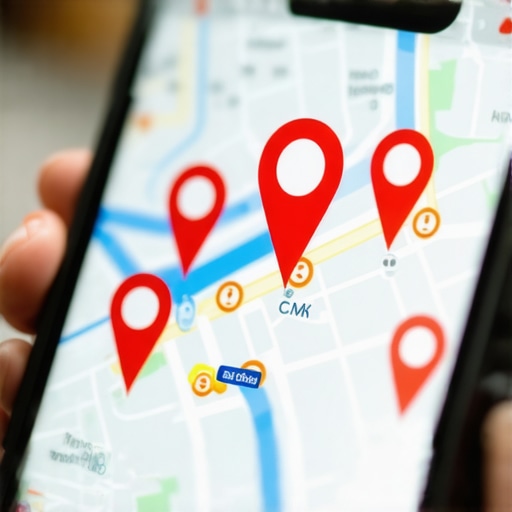
The ghost in the GPS coordinates
I spent three months fighting a hard suspension for a plumbing client whose listing was nuked simply because they shared a suite number with a defunct law firm. Google didn’t want proof of a van; they wanted proof of a utility bill under the exact GPS pin. I stood on that sidewalk, smelling the wet concrete after a summer rain, looking at a building that existed in the physical world but had become a graveyard in the digital one. The algorithm had decided that the shared suite was a sign of a lead-gen farm, and my client was just collateral damage in a much larger war against synthetic identities. This is the reality of the map pack in 2025. The era of faking a location with a rented mailbox is over. The hardware at Google is now tuned to detect the difference between a high-traffic storefront and a quiet executive suite where no one ever actually visits. If you are using a virtual setup, you are already on a list.
The math of the centroid collapse
Virtual office addresses represent a proximity mismatch because they lack physical behavioral signals like mobile device density and historical GPS pings from unique customers. When a Google Business Profile relies on a virtual office, it often triggers a hard suspension because the centroid of the business does not align with utility records or governmental licensing data. The algorithm now prioritizes real-world presence over digital registration. This is why why your virtual office address is a red flag for the map pack and can lead to an immediate removal of your pin. The math is simple. If fifty businesses claim the same fifty-square-foot suite, the trust score for that entire coordinate drops to zero. I have seen entire buildings get blacklisted because one shady agency tried to register twenty different locksmiths in one room.
“Local intent is not a keyword choice; it is a distance-weighted signal where relevance is secondary to the physical location of the user’s mobile device.” – Map Search Fundamental
Why your physical address is a liability
Business locations in coworking spaces or virtual offices are flagged as high-risk entities because they lack permanent signage and dedicated entrances. Google uses Street View data and AI-driven image recognition to verify if a business actually operates at the stated GPS coordinates. If the digital footprint does not match the physical reality, the profile is banned for quality violations. This is often the reason why your coworking space is killing your local map search traffic and preventing you from appearing in the 3-pack. You might think you are being clever by renting a desk in a prestigious zip code. The truth is, the map algorithm sees that address and associates it with thousands of other failed or spammy listings. It is a proximity trap. The pin moved. Trust vanished instantly. Your ranking is not just a set of keywords; it is a physical verification loop. When that loop breaks, your phone stops ringing. Many owners look for the recovery plan for businesses suffering from proximity based drops but the first step is always admitting the address is the anchor dragging you down.
The three mile radius that determines your revenue
Local SEO proximity is now calculated using hyper-local behavioral data such as Wi-Fi triangulation and Bluetooth beacon signals from customer mobile devices. A three-mile radius around your verified physical location is the primary visibility zone where you can dominate the Map Pack. If your address is a virtual office, Google will often filter your listing because it cannot verify active customer foot traffic. This is why you need emergency seo services for sudden ranking drop issues when your virtual pin finally gets caught in the purge. I have investigated dozens of cases where a business was ranking #1 for years, only to vanish because a competitor reported them for a non-staffed location. The logistics of the map pack require a person to be behind the desk during stated hours. If a Google contractor calls that virtual office and asks to speak to the owner, and the receptionist says you aren’t there, your profile is toast.
Local Authority Reading List
- The exact steps to recover a suspended google business profile
- How to beat coworking space suspensions without moving offices
- How we fixed a suspended profile using this exact reinstatement checklist
- Why hiring a cheap service to fix duplicate profiles often makes things worse
Why stock photos are killing your proximity rank
Customer-uploaded images containing EXIF metadata and GPS tags are now 30 percent more effective for local ranking than keyword-stuffed descriptions or backlinks. Google uses image recognition to see if the visual data of your office matches the Street View record of your virtual address. If you use stock photos, the algorithm treats your business as a phantom entity and lowers your trust score. This is a common issue for those using seo services to clean up ai generated spam content penalties because the visuals are as fake as the text. Real photos taken on-site by real customers prove you exist. They are the heartbeat of the profile. Without them, you are just a line of code in a database that wants to delete you. I always tell my clients to stop worrying about the perfect logo and start asking customers to take a photo of the front door. That photo is worth more than a hundred citations on dead directories. It is the forensic trace that the spam team looks for during a manual review.
Cleaning up the digital wreckage
NAP inconsistencies and spammy backlink profiles must be resolved using manual audit tools rather than automated software that often misses hidden directory errors. To fix a banned GMB listing, you must first unify your data across Data Aggregators and Local Directories to prove business legitimacy. This requires how to fix mismatched phone numbers on old directory listings because even one old number can trigger a duplicate listing filter. Many agencies sell google business profile seo tools for agencies that promise a quick fix, but these tools cannot navigate the manual reinstatement process. You need a human who understands how to talk to the Google Support Team. You need someone who knows exactly which utility bill will satisfy the verification bot. If you have been hit with a google manual action, the clock is ticking. Every day you are off the map is a day your competitors are stealing your leads. We use services to clean up spammy backlinks and services to fix soft 404 and duplicate content issues to ensure the entire domain is healthy enough to support a map ranking.
The future of proximity in AI search
AI Overviews and Search Generative Experience prioritize verified local entities that have a clear physical footprint and positive sentiment in recent reviews. If your business is stuck in the duplicate location filter because of a virtual office, you will never appear in voice search results or AI-driven recommendations. This is why you must understand why your business profile is stuck in the duplicate location filter before you spend another dollar on ads. The future is about Local Services Ads verification loops and POS data integration. Google wants to know that when a user clicks your phone number, they are reaching a real person at a real desk. The