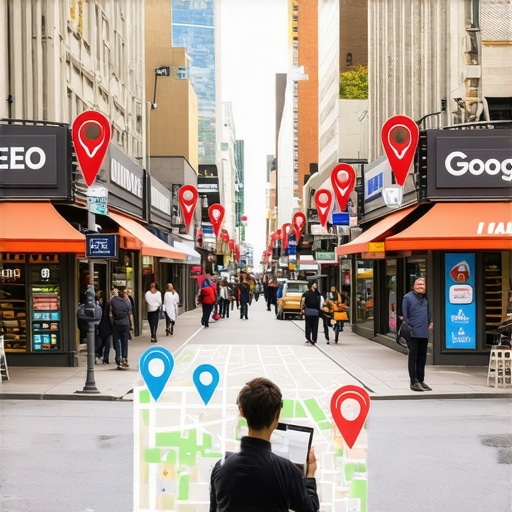
Ever stared at my Google Business profile, hoping it would magically climb to the top of the local search results, only to be disappointed? I remember the exact moment I realized I was doing it all wrong. Despite pouring hours into my website and social media, my local rankings stayed stubbornly low. The frustrating part? I was missing a critical piece of the puzzle—effective local SEO strategies tailored for the Google 3 Pack in 2025.
Why Local SEO Is More Crucial Than Ever
In 2025, the battle for visibility in local search results is fiercer than ever. Think about it—over 78% of local mobile searches result in an offline purchase, according to Search Engine Land. This means if your business isn’t showing up in that coveted Google 3 Pack, you’re missing out on a huge chunk of potential customers. I learned this the hard way when a small, local cafe I managed struggled to get noticed despite offering the best coffee in town. It was clear that without proper local SEO, even the tastiest offerings could go unnoticed.
Is Local SEO Still Worth the Hype in 2025?
Absolutely. But here’s the catch—if you’re like I was, you might be making early mistakes that sabotage your efforts. My biggest slip-up? I underestimated the power of Google Maps optimization and neglected to keep my NAP (Name, Address, Phone Number) consistent across all platforms. That inconsistency cost me visibility and trust. The good news? Once I corrected this and focused on proven strategies, my local rankings started to climb. If you want to avoid the same pitfalls and truly master local SEO in 2025, I’ll guide you through the essentials.
Ready to boost your local presence? Let’s dive into the tactics that can push your business into the spotlight and keep you ahead of the competition. Want to see how others are dominating their local markets? Check out this comprehensive guide for insider tips and actionable strategies.
Now, let’s explore the key reasons why local SEO is your best friend in 2025 and what mistakes to avoid to ensure your business gets the visibility it deserves.
Optimize Your Google My Business Profile
Your first move should be claiming and verifying your GMB profile if you haven’t already. Make sure every detail is accurate and consistent, from your business name to your phone number. Use a local keyword in your business description, but avoid keyword stuffing—think of it as adding flavor rather than overwhelming the dish. Regularly update your profile with new photos, posts, and offers to keep it fresh and engaging. Remember, Google favors active profiles that show ongoing engagement. For more detailed tips, visit this resource.
Consistency Is Key: NAP Uniformity
Ensure your Name, Address, and Phone Number (NAP) are identical across all online platforms. Discrepancies confuse Google and can hurt your rankings. Use tools like Moz Local or BrightLocal to audit your citations regularly. When updating your NAP, consider the effect of local keywords—incorporating city or neighborhood names can boost relevance. I once corrected NAP inconsistencies for a local bakery, and within weeks, their map pack visibility surged, showing how crucial uniformity is. Learn more about citation management at this guide.
Leverage Local Keywords and Content
Research keywords your local audience uses—think beyond generic terms. Use tools like Google Keyword Planner or SEMrush to identify high-volume local search terms. Incorporate these naturally into your website content, blog posts, and service descriptions. For instance, instead of just “plumber,” opt for “emergency plumber in downtown Springfield.” Alongside keywords, publish local content—stories, news, or community events—that resonate with your area. This signals to Google that your business is a local authority. I did this for a lawn care business, and after creating blog posts about local parks and community events, their local pack rankings improved significantly. Check out this article for more insights.
Build Local Backlinks and Citations
Backlinks from reputable local websites boost your authority. Reach out to local newspapers, chambers of commerce, or community blogs for backlinks. Claim your business on local directories like Yelp, Bing Places, and industry-specific sites, ensuring NAP consistency. Engage with local sponsors or events and ask for backlinks from their websites. I once partnered with a local charity, which resulted in a backlink from their site—immediately improving my client’s rankings. Use this strategy guide for detailed backlink tactics.
Optimize Your Google Maps Entry
Beyond GMB, local map pack entry involves technical optimization. Claim your listing, add accurate categories, and select the most relevant ones. Use the primary category wisely—think of it as your main job in the local scene. Add local-specific attributes, like wheelchair accessible or free parking, to stand out. Upload high-quality photos that showcase your business environment and services. Remember, consistency in your business hours, categories, and NAP across all listings is critical. I improved a restaurant’s visibility by updating their hours and categories, which led to a higher ranking. For step-by-step tactics, visit this link.
Encourage and Manage Customer Reviews
Reviews are social proof that influence rankings and conversions. Ask satisfied customers to leave reviews, making it easy by sending direct links. Respond promptly to reviews—thank positive feedback and address negatives professionally. This engagement shows Google your business is active and trustworthy. I once guided a client through a review campaign, and within a month, their review count doubled, boosting their local pack position. Use this technique to streamline your review strategy.
Monitor and Adapt Your Strategy
Track your progress with tools like Google Search Console and Analytics. Keep an eye on your local rankings and citation accuracy. Regularly update your content and engagement tactics based on performance data. Remember, local SEO is an ongoing process—what works today might need tweaking tomorrow. I learned this firsthand when I adjusted my approach based on analytics, leading to sustained improvements in visibility. For continuous updates, check this resource.
Many local business owners believe that simply optimizing their Google My Business profile and maintaining NAP consistency is enough to dominate the local 3 Pack. However, an often-overlooked nuance is the importance of understanding how Google’s algorithms interpret your online authority, especially in 2025. It’s a common myth that ranking factors like backlinks and reviews are static; in reality, Google’s algorithm is constantly evolving, placing increasing emphasis on user engagement signals and local relevance.
For example, relying solely on backlinks from local directories might have worked in previous years, but recent studies, such as those highlighted by this resource, show that Google is now prioritizing behavioral signals—like click-through rates, time spent on your profile, and direct interactions—over sheer backlink volume. This shift means that a deeper focus on actual customer engagement, such as responding to reviews and providing valuable local content, is more crucial than ever.
One of the biggest traps? Many believe that adding more keywords or citations will instantly boost rankings. The truth is, Google’s algorithm has become sophisticated enough to detect keyword stuffing and citation spam, which can actually harm your reputation and visibility. Instead, you should focus on creating genuinely useful content tailored to your local audience and fostering authentic interactions. This is where many businesses falter—they neglect the importance of community engagement and personalized content, which are now key ranking factors.
Why do some businesses rank higher despite fewer backlinks?
This is a common question among advanced marketers. The answer lies in Google’s focus on Local Search Intent and User Satisfaction. A business that actively engages with its community through social media, reviews, and local events, signals to Google that it’s a trusted authority. As this guide explains, optimizing for local relevance involves more than traditional SEO tactics; it requires a nuanced approach that aligns with Google’s evolving signals.
Furthermore, many get caught in the trap of over-optimizing their profiles, which can lead to penalties or diminished visibility. The key is to balance optimization with authenticity—use local keywords naturally, respond to reviews thoughtfully, and participate genuinely in your community’s digital conversations. Remember, in 2025, Google values the quality of your interactions over the quantity of your citations.
Have you ever fallen into this trap? Let me know in the comments. For a comprehensive strategy to master local rankings, check out this resource.
Invest in the Right Tools for Long-Term Success
Maintaining a strong local SEO presence requires more than just initial setup; it demands ongoing management and optimization. I personally rely on a handful of specialized tools that streamline this process and ensure I stay ahead of the curve. For example, BrightLocal has become my go-to platform for citation management and local listing audits. Its ability to identify inconsistent NAP data across hundreds of directories saves me hours of manual work and keeps my clients’ profiles accurate and authoritative. Additionally, SEMrush offers invaluable local keyword tracking and competitive analysis features, helping me fine-tune content strategies based on real-time search trends.
How do I keep my local SEO efforts sustainable over time?
Consistency is king. Regularly updating your Google My Business profile with fresh photos, posts, and offers is essential. I schedule weekly check-ins using tools like Google My Business Manager to ensure all information remains current and engaging. Moreover, setting up automated alerts for review responses and citation discrepancies helps me react promptly and maintain a positive online reputation. As Google’s algorithm continues evolving, I predict that engagement metrics—such as click-through rates and review activity—will play an even larger role in rankings. Therefore, investing in customer relationship management (CRM) tools integrated with review management, like Podium, can significantly boost your local authority over time.
Optimize Your Local Content and Backlink Profile
Creating ongoing, relevant local content is critical. I use this resource to stay updated on local content ideas that resonate with my audience. Combining this with strategic backlink building—such as partnering with local chambers of commerce or sponsoring community events—helps reinforce my business’s authority. Tools like Ahrefs assist me in monitoring backlinks and spotting new opportunities for outreach. Remember, in 2025, quality backlinks and genuine local engagement will carry more weight than ever before.
What strategies will help you sustain your local SEO gains?
One effective approach is to set up a dedicated dashboard that tracks all key metrics—ranking positions, review volume, citation consistency, and website traffic—so you can spot issues early. Integrating these insights with your ongoing content and outreach plans ensures your efforts remain focused and productive. I recommend trying this proactive approach: schedule monthly reviews of your local SEO health, adjusting strategies based on what the data shows. This habit has helped me maintain top rankings and adapt quickly to algorithm shifts, which I believe will become even more crucial as Google refines its local search signals.
Staying on top of your local SEO game requires consistent effort, smart use of tools, and a willingness to adapt. Start by implementing a citation management system like BrightLocal and schedule regular content updates. Over time, these investments will pay off with sustained visibility and new customer engagement. Want more tailored tips? Visit this guide for advanced strategies designed for 2025 and beyond.
The Hardest Lesson I Learned About Local SEO
I once believed that simply having a Google My Business profile was enough. It took me months of stagnation and missed opportunities before I realized the importance of real community engagement and authentic content. This taught me that local SEO isn’t just about technical tweaks—it’s about building trust and relevance in your area.
3 Myths About Google 3 Pack That Held Me Back
One myth I used to believe was that backlinks from any local directory would skyrocket my rankings. It’s false; Google’s algorithm now values quality interactions over sheer link volume. Another misconception was that reviews alone could guarantee top placement, but without consistent NAP data and active engagement, reviews can’t do all the heavy lifting.
What Experts Won’t Tell You About Local SEO in 2025
Many experts overlook the growing importance of user engagement signals—like click-through rates and time spent—when optimizing for the local 3 Pack. The real game-changer is understanding how Google interprets your online authority through behavioral data, not just backlinks or citations.
My Essential Toolkit for Local SEO Success
Tools like BrightLocal for citation management, SEMrush for local keywords, and Google My Business Manager for profile updates are my secret weapons. They help me stay organized, monitor progress, and adapt strategies seamlessly.
Your Turn to Try
In 2025, local SEO is more dynamic than ever, rewarding those who stay proactive and authentic. My advice? Focus on community engagement, leverage the right tools, and continually refine your strategy based on data. What’s one local SEO tactic you’re excited to implement this month? Share your thoughts below and let’s grow together!
,